Quick Facts about Cuenca for Digital Nomads
Jump to report ⤵Updated September 2025
| Trip Date | March 2025 | 1-bed Airbnb | £600 |
| Country | Ecuador | Cafe Latté | £1.50-2.50 |
| Currency | US Dollar (USD) | Signature Dish | Hornado 🐷 £5 |
| Primary Language | Spanish | Physical SIM | CNT 8GB – $6 |
| Population | 600,000 | eSIM | Ecuador 5GB – £11.50 |
| Airline & Closest Airport | LATAM (CUE) | Top Coworking Spot | Impaqto |
| Average Download Speed | 55mbps | Cycle Hire | BiciCuenca |
| Plug Type | Type A/B (USA/Mex) | Taxis | Azutaxi |
Introduction

Welcome to my digital nomad trip report for Cuenca, Ecuador.
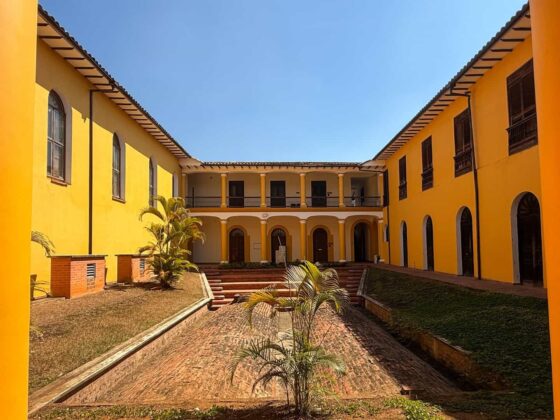
Colloquially referred to as Atenas del Ecuador (Athens of Ecuador) because of its strong legacy in culture, education, philosophy and the arts. Cuenca turned out to be my favourite city in all of LATAM and somewhere I aim to make a long-term base (Editor’s note: Spoiler, I ended up moving here six months later). While generally favoured by retirees more than nomads, Cuenca is a bustling city that is perfect for nomads and I’m going to tell you why 👇
The things I prioritise in a digital nomad destination are: liveability, café culture, how green the city is, ease of cycling from A to B, sports culture (primarily running) and availability of decent co-working spaces.
Cuenca truly has it all.
The city has got to have the highest concentration of swanky cafés per square kilometre in all of LATAM, it is great. I love cafés and I can’t live without starting my day with a nice big ol’ latte.
On top of that, they’re big on cycling, running (with social clubs), hiking and the city has two annual half marathons and a marathon too… just a shame it sits at 2,500 metres above sea level. My lungs could never.
Co-working spaces are plentiful too, not loads, but I counted about 5 and they’re very high quality with lots of availability, plus, cafés are super welcoming to digital nomads, as they haven’t been overrun with digital nomads just yet!
And then top it all off with being one of the safest places in all of Ecuador by a country mile, you are well and truly sorted.
It’s another mystery, like Bucaramanga, as to why there aren’t more nomads here? But guess what? Good. Stay away and let me enjoy it for myself.
Table of Contents
- Quick Facts about Cuenca for Digital Nomads
- Introduction
- How to Travel to Cuenca
- Can I work remotely from Ecuador?
- How to extend your tourist visa in Ecuador
- Does Ecuador have a digital nomad visa?
- What are the best neighbourhoods in Cuenca?
- Is Cuenca safe?
- Where To Work in Cuenca
- Things to See & Do in Cuenca
- Food & Drink in Cuenca
- My Favourite Spot in Cuenca
- When To Visit Cuenca
- How To Keep Fit in Cuenca
How to Travel to Cuenca
Getting to Cuenca is a little bit more difficult than other places that I have reviewed, but not completely impossible.
1️⃣ Fly to Cuenca AirportFastest
Cuenca has its own airport, Mariscal Lamar International Airport, and whilst the name says otherwise it only offers national flights to/from Guayaquil (once a day) or the capital Quito (~5 times a day). Which means you’ll need to fly to one of these airports first and then get a connecting flight. LATAM flies to Cuenca from both airports and Avianca flies from only Quito.
2️⃣ Take a minibus from Guayaquil Cheapest
Known locally as “furgonetas”, this is how I travelled to Cuenca. I flew from Pereira, Colombia to Guayaquil and then took a shared transfer. I took a minibus with a company called Operazuaytur who charge $12.50 for a seat in a 12-seater minivan. The journey takes about 3.5 hours in total including a brief stop for about 20-30 minutes after about 2.5 hours, which, in my humble opinion, is an utter waste of time, but there we go. The boarding/disembarkation point in Guayaquil is here, just a 5-minute walk from the airport and for Cuenca, it’s here. You can arrange to be picked up from Guayaquil airport directly, I think it’s an extra $2 or $3. Uber recently launched (November 2025) in Cuenca but at the time of writing it has a very small number of drivers, thankfully they have their own app called “AzuTaxi“, you summon a taxi to your location and then pay by the meter. The majority of taxi fares won’t exceed $2.50, and make sure the meter is on when you set off, it’s a legal requirement.
3️⃣ Take a private tour from Guayaquil Best for groups
When I left Cuenca to return to Guayaquil, I decided to take this option and I’m so glad I did. Whilst, for one person it’s pricey at £150/$200, it’s only £80/$100 each in a group of four, for example. You’re picked up from your chosen spot in the morning at around 9am and your driver will take you high up to El Cajas National Park, one of the most picturesque and important spots in all of Cuenca. You’ll embark on a short and easy hike of about 2-3km that lasts around an hour. Once back in the car, you continue your drive all the way past 4,000masl before starting the descent to Guayaquil. Afterwards you’ll stop for lunch at a local spot and then visit an independent cacao farm where you’ll grind some cacao and mix it with sugar to make your very own chocolate. The whole tour takes about 6 hours from start to finish. You can book this exact tour here through Viator. Note: the listing states from Cuenca to Guayaquil but you can book it for the other direction, just request it at the time of booking.
If you want more detail about travelling between the two cities, you can read my guide here.
Can I work remotely from Ecuador?
Ecuador is a great option for digital nomads and often over-looked for more popular countries in LATAM. Ecuador has a fairly liberal visa policy with citizens from over 150 countries permitted entry to Ecuador visa-free for 90 days within a 12-month rolling period, and you can extend for another 90 days too.
Note that your “12-month period” starts on your first entry into Ecuador and you have 90 days total (multiple entries are fine) for the next 12 months. Your allowance will reset once 12 months have passed.
Example:
- You enter Ecuador on 1 July 2025.
- From that date, you have 90 days to use until 30 June 2026.
- It does not reset when you leave Ecuador. It is counted from the entry date, over a rolling year.
How to extend your tourist visa in Ecuador
You can extend your tourist visa for an extra 90 days within a 12-month period, the cost of which (as at May 2025) is $80. The process can be done entirely online and the processing time can be up to 10 working days (keep that in mind when applying).
Open application portalDoes Ecuador have a digital nomad visa?

Last updated APRIL 2025 Yes, Ecuador has a digital nomad visa and this is probably the only guide on the internet that actually has the right links of where to go. This is the official resource for the Ecuador Digital Nomad Visa and it’s associated application.
The official name is Visa de Residencia Temporal Rentista para Trabajo Remoto (or Visa Nómada for short) or in English, that’s Renter Temporary Residence Visa for Remote Work (Nomadic Visa). I think.
- The maximum permitted time is 2 years, it’s extendable by another 2 years if you don’t spend more than 90 days outside of the country
- The whole process can be done online, you may be required to conduct an in-person interview
Requirements are as follows and if you’re looking for an in-depth guide on the visa and how to get it, from somebody who’s got it (me), you’ll want to read my guide, here.
Mandatory Requirements:
- Colour photography in JPG format maximum of one MB, 5 x 5 cm (2 x 2 inches), updated, with white background, facial expression should be neutral (preferably), or have a natural smile, with both eyes open;
- Valid passport with a minimum validity period of six (6) months;
- Original certificate of criminal record from the country of origin or in which he had resided for the last five years, translated, apostilled or legalized. One hundred eighty (180) days of validity will be taken into account, counted from the date of issuance of the certificate to the last entry of the interested party into the country. Certificates issued by federal governments will be valid as long as they understand the criminal record at the national level. Document required only for people over 18 years of age.
- Payment of the fee set by the human mobility authority; and,
- Other documents that the authority requires in the cases that it merits.
- Accredit licit livelihoods under the Ministerial Agreement No. 70 of June 28, 2024. (Link: https://www.cancilleria.gob.ec/wp-content/uploads/2024/07/0000070.pdf)
Special Requirements:
- Demonstrate income from a foreign source of at least three (3) Unified Basic Wages per month, of the three (3) months prior to the visa application, or have a total of thirty-six (36) Unified Basic Wages for each year , for which the foreign person must attach copies of their international account statements reflecting said income;
- Attach documents that demonstrate that the visa applicant works or provides services for a foreign employer, client or company, domiciled abroad, to
- Anyone who submits documentation that shows that they are the owner of a company or company registered and domiciled abroad may also apply to this visa; Nationals of the countries on the list who will prepare the Ministry of Tourism for this purpose may apply for this visa- (ALL COUNTRIES Oficios No. MT-MINTUR-2022-0920-OF and MT-MINTUR-2022-1173-OF, of February 24 and March 14, 2022, respectively).
- You must present a national or foreign health insurance in force for the same visa period. In case of being hired with a foreign company, the policy or the contract must indicate that it has coverage in Ecuador.
- In order for the holder of this category to protect other people, they must justify additional monthly income of two hundred and fifty (250) US dollars for each person covered.
What are the best neighbourhoods in Cuenca?
Cuenca is compact and walkable, with most nomads sticking to a few key neighbourhoods. The historic centre is where most of the charm lies, but there are a couple of quieter and more residential areas that are still within walking distance of everything you’d want. Here’s the breakdown:
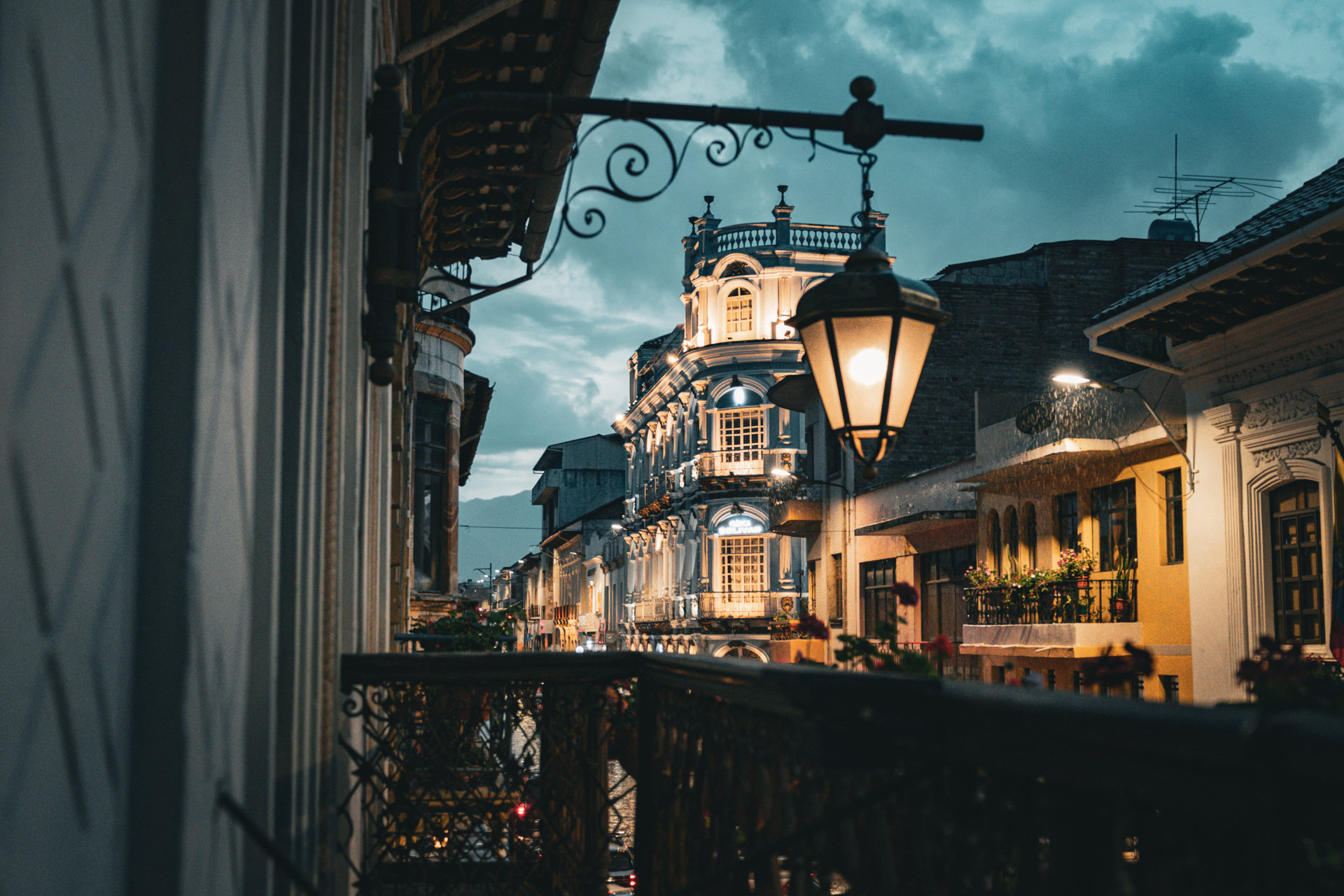
This is Cuenca’s UNESCO-listed historic centre and where you’ll find the most charm, colonial architecture, plazas and cafés. Most Airbnbs are based here and it’s super walkable. If you like being close to the action and don’t mind a bit of noise, this is the spot. Interestingly, on my travels I’ve often steered clear of the historical centres in LATAM cities, they’re normally grubby, crowded and unsafe. But Cuenca’s historic centre breaks all of those patterns and is absolutely stunning, packed full of cafés, spotless, well-maintained streets and loads of great Airbnbs. I stayed next to Parque San Sebastian and it’s super quiet, but the same can’t be said for all of the historic centre, so check reviews carefully.
- Walkable, full of life and culture
- Great cafés, restaurants and markets
- Fast fibre internet is widely available
- Noisy streets and traffic in parts
South of El Centro, El Vergel is a great, leafy residential area that still feels local but has a growing number of cafés and restaurants. It’s also close to Parque de la Madre and the river trails, making it great for those who want a quieter base while still being close to town.
- Quiet but walkable to El Centro
- Nice green spaces and trails nearby
- More modern apartments available
- Fewer Airbnbs
To the west of the city, Puertas del Sol is a newer, more upscale residential neighbourhood popular with long-term expats and if you’re looking for long-term living this is one of the best neighbourhoods in Cuenca that’s still relatively central.
- Modern apartments and quiet streets
- Popular with long-term expats
- Right on the river trail for walking or running
- Further from El Centro (20–30 min walk)
- Not much nightlife or café culture
Mentioned earlier and pretty much still within El Centro, the western section around Parque San Sebastián feels like a little city within a city. It’s slightly quieter than the central historic area, but still within a few minutes’ walk of everything. The modern art museum is here too. This is where I stayed and I loved it, Parque San Sebastian is beautiful and very peaceful. This was my Airbnb and I highly recommend it.
- More relaxed than the core of El Centro
- Still central and walkable
- Some great local restaurants
This is the stretch of Ordóñez Lasso Avenue heading west out of Cuenca, unofficially dubbed “Gringolandia” due to its popularity with North American expats. It’s full of newer apartment buildings, supermarkets and American-style comforts, but it’s a short bus or taxi ride into the city centre.
- Modern apartments with great amenities
- Quiet and safe, great for long stays
- More English spoken and expat services
- Quite a long walk to El Centro (~30 mins)
- Lacks charm and authenticity
Yanuncay is to the south of Cuenca and quite an expansive barrio, so there are some good spots and not-so-good spots, but this is where I live at the time of writing and I love it. Peaceful, modern, green and very charming, but a little boring if you’re doing this solo. After a few months here I decided to head back to somewhere more central and I’m based in-between El Centro and El Vergel.
- Lots of green space
- Close to Mall del Rio and the upcoming Mall del Alto if you love shopping
- Cycle paths and trails aplenty
- A lot more remote than the other options (40 mins+)
Is Cuenca safe?
 Cuenca is widely regarded as one of the safest cities in Ecuador and some would argue, the safest. The only real competition are the Galápagos Islands… but they’re so safe you can leave your car keys in the ignition and they’ll be there the next day – the wonders of island life.
Compared to other Ecuadorian cities like Guayaquil or Quito, Cuenca feels remarkably calm and secure. The historic centre is always buzzing with life, but not in a way that feels chaotic or edgy. You’ll find locals walking around late into the evening, kids playing in plazas and very little of the tension that’s present in bigger cities. And nothing says safe like seeing people walking around the streets texting on their phones without a care in the world.
Of course, like anywhere, you should take normal precautions. Petty theft can still happen, especially in crowded areas and there are even signs warning of pickpockets in the main centre. But as a digital nomad, you’re far less likely to encounter serious issues here than what you might in other Latin American destinations.
If you’re staying in neighbourhoods like El Centro, El Vergel or Puertas del Sol, you’ll find them clean, calm and very liveable. Even at night, most parts of Cuenca that you’d be interested in as a visitor or nomad feel perfectly safe to walk around.
Verdict? If safety is high on your list, Cuenca absolutely delivers.
Where To Work in Cuenca
Cuenca has some really high quality co-working spots and there’s an abundance of cafés too. Although, unlike other destinations in LATAM, café surfers seemed pretty much non-existent and it wasn’t frowned upon. Cuenca is more popular with retirees than nomads in that regard. If you want to find out more about co-working spaces in Cuenca, read my detailed guide, here.
IMPAQTO Top Choice

Impaqto is a start-up incubator and co-working chain in Ecuador with offices in Cuenca, Quito, Guayaquil, Cumbaya and partner sites in Ibarra, Ambato and Loja. It’s a little on the pricey side and there were one or two moments where the internet lagged but for the two weeks I used the offices, it was great.
Most of the time download speeds were around 30mbps, but a couple of times it dipped to 2-3mbps, but it was rare. Pricing wise it works on selling blocks of hours (not sure how it’s enforced): 40hrs is $127, 80 is $157 and unlimited is $197 a month. So, if you averaged about 30 hours a week, the unlimited option is less than $2/hr and pretty good value. Oh and you can bring your dog, +10 points from me!
La Ofi
La Ofi is more centrally located in El Centro and has the added bonus of a photographic studio which you can use as part of your membership. I didn’t check this out but it does offer a $10 day-pass, so it’s well worth looking into.
Pricing model is the same as IMPAQTO but they do offer a day-pass for $10. Their unlimited package is more expensive but the hourly rates for shorter commitments are a lot better, making this a better choice for casual users. 40 hrs is $80, 80 hours is $120 and unlimited is $200 a month.
Casa Rivera UCuenca Free
One of the buildings belonging to Cuenca University and it offers a free space for co-working. I feel that it’s probably targeted to locals, but just turn up, walk in and register (there’s a QR code that takes you to a Google Form). I didn’t stick around, the furniture is a bit tired and the noise from the river is a bit much, it’s all open plan. But if you fancy something a bit different and want to be working a bit closer to nature, this is the spot.
There are loads of other options too: a former Selina (now SocialTel) is here, Coworking Cuenca, Zona 256 and COSE Coworking to name a few.
Things to See & Do in Cuenca
Cuenca isn’t packed with adrenaline-fuelled activities or annoying tourist traps, but, that’s kinda the point of the charm that Cuenca has. Fear not however, there is more than enough to keep you busy here.

🏛️ Walk around the Historic Centre
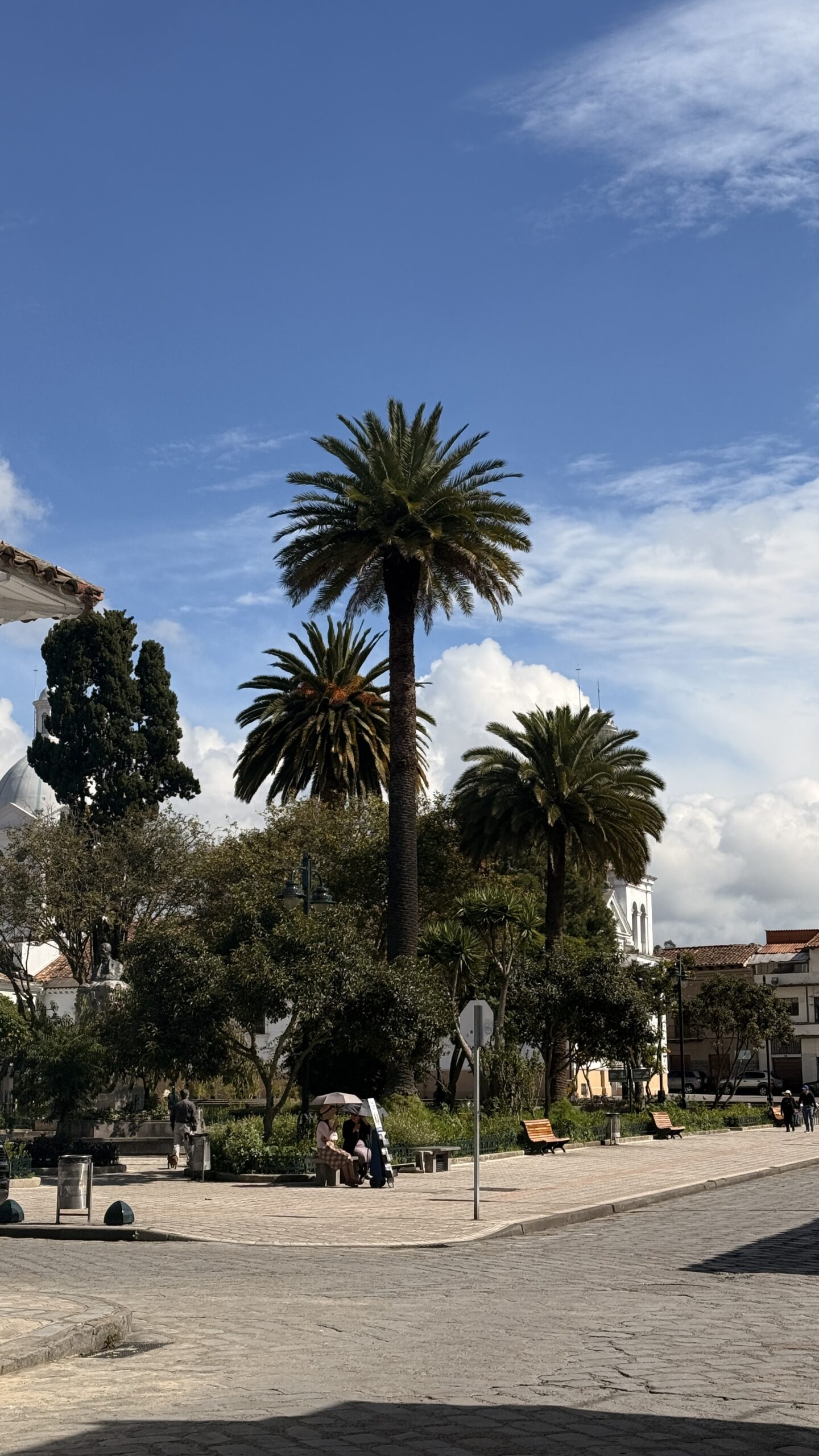
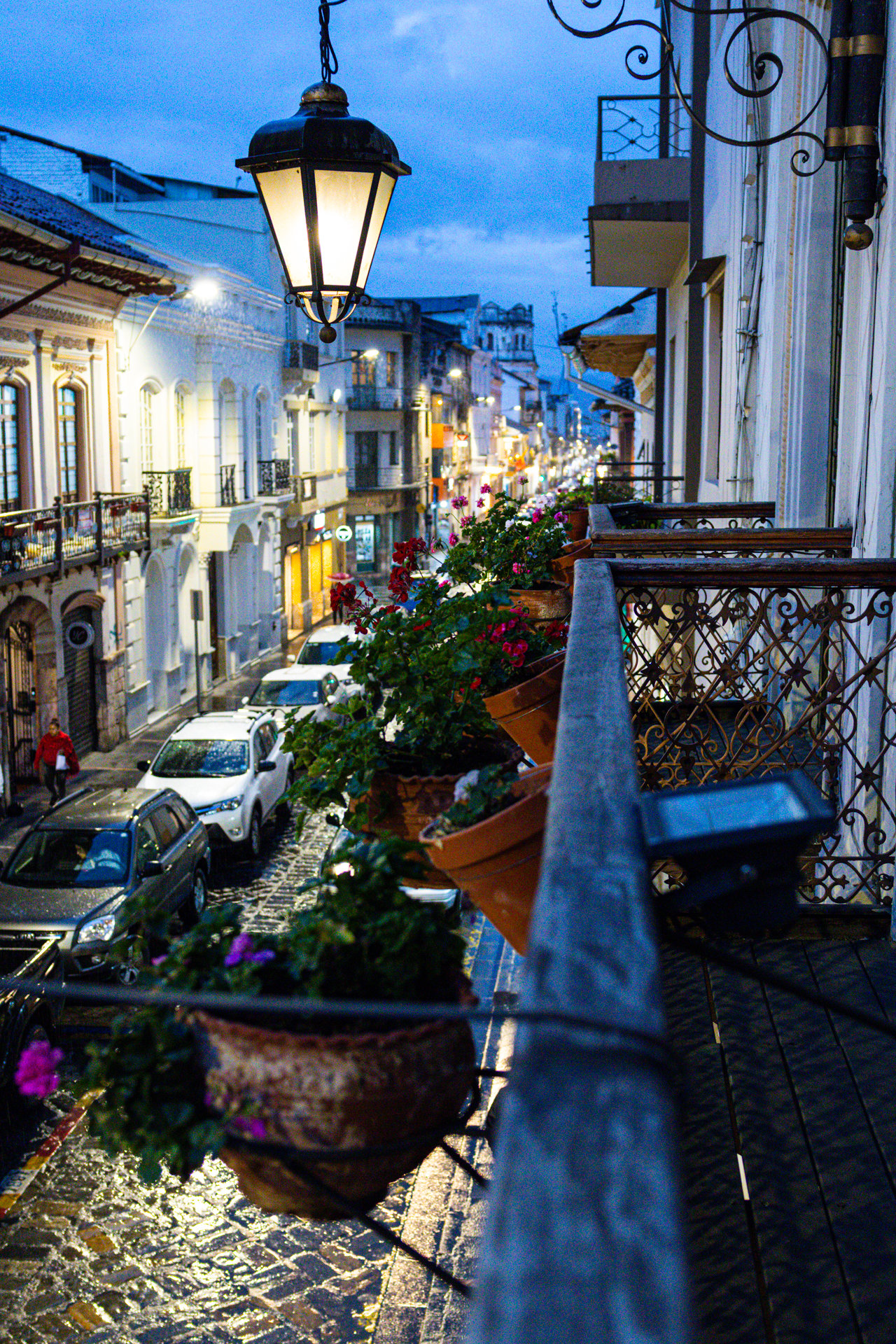
Cuenca’s Historic Centre is a UNESCO-listed site for a reason. One of the most beautiful historic centres in Latin America with cobbled streets, colonial churches, leafy plazas and a mixture of French and Spanish influence, it’s super-photogenic. Grab a coffee and just walk around, no agenda needed here.
Book A Walking Tour⛪ Climb the towers of the New Cathedral
The New Cathedral is actually almost 200 years old but was only completed in 1975. The iconic blue domes of the cathedral, can be reached via a small entrance on Calle Santa Ana, which is to the right of the cathedral if you have Parque Calderon behind you.
Bonus Fact Calle Santa Ana was Cuenca’s first ever street dating back to the city’s founding in 1557 by the Spanish.
👣 Walk along Río Tomebamba
One of the best things to do in Cuenca and my personal favourite. The interesting part about it is, it acts as a natural boundary between the historic centre to the north and the more modern part of Cuenca to the south. On the northern bank you’ll find cafés, seating and rolling cobblestone paths and on the southern bank you’ll find a modern wide pavement and avenue. Both sides serve as a great place for a late-afternoon run and, you have about 15 kilometres of path on each side of the river.
⛰️ Take a day trip to Cajas National Park
Cajas (or El Cajas) is about 30-40 minutes away by car or bus and is a moody, windswept highland park that’s filled with lakes and rocky trails, which will remind you of the Scottish Highlands (Or, if you’re nerd like me, you’ll feel like you’re in the world of Death Stranding). Whilst this advice generally applies to all of Cuenca: if you’re heading here you need to pack for all seasons, regardless of the weather when you head out, the high altitude makes it very unpredictable. Entrance to the park is free but make sure you register at the ranger station before heading out.
Book A Day TripRelated post

🤠 Visit a real Panama Hat workshop
Despite the name, Panama hats are actually 100% Ecuadorian, and Cuenca is one of the hotspots for their production. You can visit the Homero Ortega Panama Hat Museum which is part museum and part shop or visit any number of Panama hat shops throughout the city.
Book Tickets♨️ Take a dip in Piedra de Agua
Just a short drive west of Cuenca is Baños de Cuenca (just don’t confuse it with the famous town of Baños in Central Ecuador). This little pueblo is home to the fancy spa Piedra de Agua. There are a couple of pools where you’ll find locals making their way through the cocktail list or if you’re feeling fancy there are plenty of packages that include the subterranean pools and hot stone massages. Here’s a little video tour.
🖼️ Museo Pumapungo
Pumapungo is Cuenca’s most popular museum, exhibiting the indigenous cultures and colonial history. At the back of the museum you’ll be able to see the remains of Inca terraces, a small botanical garden and a jam-packed aviary, too! Here’s a little video tour.
🛍️ Mercado 10 de Agosto
Cuenca’s main traditional market in the centre, set over 3 floors (maybe 4, I can’t remember). It’s your typical LATAM market experience; meat counters, spice stands, overflowing fruit pyramids and an assortment of local goods. Head up to the top floor and enjoy a “menu del dia” for only a few pounds.
Food & Drink in Cuenca
The café and restaurant culture in Cuenca is truly amazing, even to the point it’s suspicious, there are too many cafés and restaurants and not enough people. Which is great, you’ll rarely need a reservation for anywhere.
Local Cuisine
- Hornado is the city’s signature dish; a slow-roasted pork marinated in citrus. Best place? Mercado 10 de Agosto of course, just look for the busiest stand.
- Cuy, or, as we call it, guinea pig. You know, the cute little pet? Yeah, they eat it here. Didn’t try it personally but Guajibamba is a recommended spot for their cuy.
- Locro de papa is a thick potato soup, normally served with cheese or avocado. Try it at Raymipampa next to the Cathedral.
The best cafés in Cuenca
Cuenca is absolutely packed to the rafters with amazing cafés.
- Majoni Bistronomie – Probably the most boujee café in central Cuenca and I loved it, right next to Parque Calderon
- Ooh la la Café – A French-inspired café that is an absolute must visit for brunch. Expect queues at the weekend.
- Sinfonia Café – One of Cuenca’s highest rated cafés and it’s no surprise. Specialty coffee and great brunch.
- Nomadas Café – They have two, one on Calle Larga and a smaller one in Puertas del Sol. The former is one of my favourite spots in Cuenca, lovely vibe, killer coffee, food and cookies.
- Dulcet Cafeteria – A fairly run-of-the-mill café but the staff were so friendly, really comfy seating, great Wi-Fi and delicious food.
- Café Del Museo – Is probably the most picturesque café in Cuenca, overlooking the river. An absolute must-see
- Slow Brew – Found this place recently and it’s actually in the top 100 cafés in all of South America.
And honestly we’ve barely scratched the surface here, there’s SO MUCH to see.
🍽️ Best Restaurants in Cuenca
Whilst Cuenca is no Lima, there are a number of really great high-end restaurants. No Michelin Stars yet, but I’m sure somebody will crack it eventually.
- SAUJA Bistro – Often cited as one of the best restaurants in Cuenca, offering amazing food and cocktails. They also have a second, highly-rated location called SAUJA Rooftop in Puertas del Sol.
- Le Petit Jardin – A charming French spot with a weekly-changing menu of seasonal dishes. A little hard to find in the north-west of the city, but well worth it – just find a local taxi driver to take you.
- Museo De La Gastronomia Cuencana Restaurante – A unique spot that combines a museum with a restaurant. A bit far out of town but definitely recommend a detour, no visit to Cuenca is complete without dinner and a tour here.
 My Favourite Spot in Cuenca
Majoni Bistronomie (referenced above) is probably my number one spot for cafés, followed closely by Casa del Parque which is a food court in a massive restored colonial mansion. Aside from food spots? Río Tomebamba is a great place to walk, run or just watch the world go by.
When To Visit Cuenca
Thanks to its high-altitude setting, Cuenca enjoys a mild, spring-like climate all year round. Whilst you won’t get the tropical heat of Guayaquil, it’s much more mild and liveable, just note that Cuenca’s weather is notoriously unreliable due to its location and it’s chilly in the mornings, so always pack a jacket, even on a hot summer’s day.
Best Time to Visit Cuenca
The best time to visit Cuenca is between June and September, this is the dry season and when the city experiences its best weather. Perfect for working from a terrace or heading up to El Cajas. This is also high season for tourism, but you’ll never really feel that overrun in Cuenca.
Other Times to Visit Cuenca
If you’re looking to avoid crowds, May and October are really good shoulder months, still pleasant, but with fewer visitors.
November to February tends to bring the most rain, though it usually comes as short afternoon showers rather than all-day downpours. I visited during March and I would say it was 50/50 rain and sun, with chilly mornings and pleasant afternoons.
Climate by Month in Cuenca
| Month | Average High 🌡️ | Average Low 🌡️ | Weather 🌦️ |
|---|---|---|---|
| January | 21°C (70°F) | 9°C (48°F) | 🌧️ Rainy & Mild |
| February | 21°C (70°F) | 9°C (48°F) | 🌧️ Wettest Month |
| March | 21°C (70°F) | 9°C (48°F) | 🌦️ Afternoon Showers |
| April | 21°C (70°F) | 8°C (46°F) | 🌧️ Wet Season Tapering Off |
| May | 21°C (70°F) | 8°C (46°F) | ⛅ Cooler & Drying Out |
| June | 20°C (68°F) | 7°C (45°F) | ☀️ Dry Season Starts |
| July | 20°C (68°F) | 7°C (45°F) | ☀️ Cool & Crisp |
| August | 21°C (70°F) | 7°C (45°F) | ☀️ Dry & Sunny |
| September | 21°C (70°F) | 8°C (46°F) | ⛅ Slight Warming |
| October | 21°C (70°F) | 9°C (48°F) | 🌤️ Ideal Shoulder Month |
| November | 21°C (70°F) | 9°C (48°F) | 🌦️ Occasional Showers |
| December | 21°C (70°F) | 9°C (48°F) | 🌦️ Warm Days, Rain Returns |
How To Keep Fit in Cuenca
Cuenca offers a laid-back lifestyle but it’s super bike-friendly with lots of paths and a bikeshare scheme (BiciCuenca). Whilst the high altitude of 2,500masl will make the easiest of jogs a bit tricky, it shouldn’t take much more than a week or two to acclimatise and if you have a high level of cardiovascular fitness, you’ll be fine almost straight away.
👟 Running in Cuenca
Cuenca is great for running and the real standout are the paths alongside Tomebamba river which total around 30km. If you’re looking for a track, there’s a three-lane soft dedicated running track in Parque de la Madre which also has outdoor gym equipment.
I found two, what I believe are, run clubs in Cuenca on Instagram: Run Squad and Road Runners Cuenca
🥾 Hiking & Trails in Cuenca
Your best bet is always El Cajas, with the shortest trail being a few kilometres stretching all the way up to multi-day hikes. Closer to Cuenca you have Cerro Verde, El Valle, Tutupali and much more, you will be spoiled rotten. As I always recommend, don’t leave home without the AllTrails app – the pro version also gives you offline maps, so you don’t have to worry about getting lost when your signal dies. If you’re into social hiking there’s a great club called Outdoors Cuenca who head out multiple times a week.
🚴 Cycling in Cuenca
Cuenca has a great cycling culture. There are several bike lanes and green corridors throughout the city and the riverside path is also bike-friendly if you have an MTB or gravel bike.
If you’re into road cycling or MTB, there are some tough routes leading out into the mountains, especially towards Cajas. The altitude makes them brutal, but the scenery makes it worth it.
🏋️ Gyms in Cuenca
Cuenca has a great gym scene and no city in LATAM would be complete without a SmartFit, which can be found at Wayra Plaza in the southeast. There are about ten other local options too, worth checking on Google Maps.
🧘 Other Options for Keeping Fit in Cuenca
There are plenty of other options too, whether you want to learn salsa, karate, MMA or something else. A quick search on Google or Google Maps will return a myriad of options for you.
Want to see more? View my postcards from Cuenca, here.
So, Would I Recommend Cuenca for Digital Nomads?
So, Would I Recommend Cuenca for Digital Nomads?- Getting There7/10 GoodWhilst it does have its own airport, there are no international flights, so you'll have to head to Quito for a connecting flight or Guayaquil for the overland option or connecting flight too. The drive is only 3-4 hours, so it's not too bad.
- Digital Nomad Visa Availability8/10 Very goodAlthough Ecuador hasn't followed in the footsteps of Colombia by updating their tourism regulations to allow remote work, they're digital nomad visa is straight-forward, cheap to apply for, low income requirements and a very quick process.
- Co-Working Suitability8/10 Very goodThere are an abundance of high-quality co-working spaces and thanks to the low amount of nomads, you can happily work from a number of cafés.
- Internet Connectivity7/10 GoodThe city has excellent internet and my Airbnb comfortably achieved over 80Mbps. However I did run into issues when using Claro, with a few 4G blackspots throughout the old city, which was mildly infuriating. Movistar and CNT have coverage here and I would advise trying different options.
- Safety & Security9/10 AmazingEasily the safest city in Ecuador and probably one of the safest cities in Latin America.
- Things To Do7/10 GoodWhilst it will pale in comparison to the likes of Quito, this is still a great city and perfect for those that love to stay active.
- Culinary Scene8/10 Very goodAn absolutely sensational café scene and a host of great local and international restaurants. Whilst you won't get Michelin-star restaurants here (just yet), there are plenty of boujee spots to show off on Instagram, if you're that way inclined.
- Affordability8/10 Very goodWhilst Airbnbs right in the middle of the centre can rival European prices, there are plenty of little studios for way under $1000 a month. If you can get a local listing privately, you'll be able to half that. Cuenca is super-affordable.
- Getting Around6/10 NormalUnfortunately there's no Uber or Didi in Cuenca, but taxis are plentiful and they all run by the metre, you can easily get from one side of town to the other for about $2 and traffic isn't too bad.
- Community5/10 NeutralWhilst Cuenca has a large expat community, it's made up mostly of retirees from North America and Europe. As such, if you're looking for a typical nomad community, it'll be a little harder than in other cities.
- Climate7/10 GoodA warm, spring-like climate year-round, with temperatures hovering between 16°C and 22°C most days. It's not as toasty as somewhere like Bucaramanga in the summer, and it gets super grey in the wet season, but it's still a lovely place to be.