Quick Facts about Bucaramanga for Digital Nomads
Jump to report ⤵| Trip Date | February 2025 | 1-bed Airbnb | £700 |
| Country | Colombia | Cafe Latté | £1.50-2.50 |
| Currency | Colombian Peso (COP) | Signature Dish | Hamburger £5 |
| Primary Language | Spanish | Physical SIM | Claro 100GB – £11 |
| Population | 650,000 | eSIM | LatAm 5GB – £15 |
| Airline & Closest Airport | Avianca (BGA) | Top Coworking Spot | ColorWorking |
| Average Download Speed | 45mbps | Cycle Hire | Clobi (Possibly no longer operating) |
| Plug Type | Type A/B (USA/Mex) | Taxis | Uber & Didi |
Introduction

Welcome to my digital nomad trip report for Bucaramanga, Colombia.
Known as La Ciudad de los Parques (The City of Parks), this place is so unbelievably good, I didn’t even want to write this report.
To sum the place up briefly, take all the best bits of Medellín: the restaurants & cafés, the consistent spring climate, endless green streets and all of the nearby nature you can hike in.
Then, half the price of everything, reduce the population by two-thirds, get rid of 95% of the tourists and increase safety ten-fold. And cha-ching, you have, in my humble opinion, the best city in Colombia.
Bucaramanga is often overlooked for Colombia’s more famous cities: Medellín, Bogotá, Cali and Cartagena.
And that’s what makes it so utterly fantastic.
It’s a modern, green, and incredibly liveable city, with great cafés, reliable infrastructure and way fewer tourists.
Just like Medellín, the city is packed with green spaces, outdoor cafés, and a perfect year-round climate of warm days, cool nights without the intense coastal humidity, and, Brucey-bonus, it’s elevation is lower than Medellín (1,500masl) and Bogotá (2,650masl) at a comfortable 950masl.
For nomads, it hits an absolute corker of a sweet spot: it’s walkable, super-affordable and, most importantly, really safe without being boring. It’s the kind of place where you can work from a leafy park café (📍Café Bajo Sombra), take a sunset run through any one of the 160 parks in the city and actually feel like you’re really living somewhere, not just passing through.
So why don’t more nomads come here? Don’t know, don’t care. Enjoy it while you can!
Table of Contents
- Quick Facts about Bucaramanga for Digital Nomads
- Introduction
- How to Travel to Bucaramanga
- Can I work remotely from Colombia?
- Does Colombia have a digital nomad visa?
- What are the best neighbourhoods in Bucaramanga?
- Is Bucaramanga safe?
- Where To Work in Bucaramanga
- Things to See & Do in Bucaramanga
- Food & Drink in Bucaramanga
- My Favourite Spot in Bucaramanga
- When To Visit Bucaramanga
- How To Keep Fit in Bucaramanga
How to Travel to Bucaramanga
Due to Colombia’s terrain, getting between most cities is often done by plane with one-way flights around the country as little as £20 without hold luggage. That’s not to say you can’t take a bus, but to compare: Bogota to Bucaramanga by bus can take up to 12 hours depending on the traffic, versus a 55-minute flight.
1️⃣ Fly to Bucaramanga AirportFastest
Bucaramanga has an international airport and although it’s actually not in Bucaramanga (how London of them), it’s only about a 30-45 minute drive from the city depending on traffic.
Palonegro Airport (BGA) is served predominantly by Avianca, Clic and Wingo – the three main airlines you’ll encounter in Colombia, with Avianca being the flag-carrier. And between the three of them you can enjoy connections to over 10 Colombian cities, including Bogotá for international connections.
Whilst BGA is billed as an international airport, you can only fly to Panama with Copa and Fort Lauderdale with Spirit. For more comprehensive connection options, you’ll need to fly to Bogotá (BOG) or Medellín JMC (MDE).
BGA is a great little airport and, in my experience I went from taxi to gate in 10 minutes when I took my flight to Bogotá, and that was on a Saturday morning. There’s a few executive lounge options too. If it’s always like that, I’d highly recommend it.
2️⃣ Take a bus with Berlineas del Fonce Cheapest
If you’re on a tighter budget and time isn’t an issue, then taking a bus with Berlineas del Fonce from Bogotá (or Baranquilla, Cartagena and Santa Marta) is the way to go. If you’re travelling in the day, choose the “BPV” bus option and if you’re opting for overnight (which will be quicker due to traffic) then choose Berlinave Super Plus. To the best of my knowledge they are identical.
Now, the real tip here is, both of these buses are double-deckers. When it comes to choosing your seat, select from Piso 1 which is downstairs, where there will only be 12 seats in a 2-1 configuration. If you’re travelling with somebody, pick the seats numbered 33-40 which will put you next to each other and if you want to be sat alone pick one of the seats numbered 41 to 44. This little VIP-style cabin, is the same price as sitting upstairs but the seats are way bigger and comfier, plus it’s secluded. Bargain.
Can I work remotely from Colombia?
Colombia is fantastic for digital nomads. If you’re from one of the 80+ countries that doesn’t require a visa to visit as a tourist you can immediately work remotely for up to 90 days. Colombia, along with Canada and New Zealand (at the time of writing) are the only three countries that have reworded their tourism regulations to explicitly allow remote work.
You can also extend your stay up to 180 days, and there’s a handy guide on how to do it here.
Does Colombia have a digital nomad visa?
Last updated January 2025 It certainly does and it’s one of the easiest out there. While you can legally work remotely from Colombia for up to six months without (see above), if you want to extend your stay for up to two years, then the Colombian Digital Nomad Visa is the way to go.
Like with most digital nomad visas, the outcome can be different for many people, but from extensive research over the past year or so, this is what I understand to be true:
- The maximum permitted time is 2 years
- Some people only get 1 year
- Whilst there is nothing definitive: most reports state you’ll get 2 years if you apply from outside of Colombia and 1 year if you’re already there
- I wrote to the Colombian government to ask this and they responded refusing to elaborate on “hypothetical matters”
Requirements are as follows (this is direct from the official source)
- To have a passport, travel document or Laissez Passer that, being issued by an Authority, International Organization or State recognized by the Government of Colombia, has a minimum validity of six (6) months at the time of the visa application, is in good condition and with free pages to stamp the visa sticker, in the cases in which it is required. Provide a copy of the main page of the passport, travel document or valid Laissez – Passer where the personal or biographical data of the holder is registered.
- Hold a passport from one of the 80+ visa exempt countries listed here (doesn’t rule you out if you’re on the list with entry requirements, it’s just more complicated)
- Foreigners requesting a visa while in Colombian territory must provide a copy of the passport page with the most recent entry stamp or equivalent entry authorization issued by the Special Administrative Unit of Migration Colombia, or a safe-conduct to prove their regular stay in the country.
- Citizens of nationalities exempted from short stay visa by resolution, who apply for their visa in the territory of a State other than that of their nationality, must provide a copy of the document that in accordance with the immigration regulations of the country in which they are staying, proving their regular stay. Citizens of nationalities not exempted from short stay visa who apply for a visa in a country other than that of their nationality, must provide a copy of the document that proves their migratory status as a resident.
- Letter in Spanish or English, issued by one or more foreign companies for which the foreigner provides services, indicating the type of relationship and the type of remuneration received by the applicant. In case of having a contract with such company, provide it, or prove that he/she is a partner or co-owner of a company abroad and a letter indicating that his/her work for the company is performed remotely.
- In the case of entrepreneurs, present a motivational letter explaining their entrepreneurial project and the financial and human resources they have or aspire to have for their venture.
- Demonstrate, by means of bank statements, a minimum income equivalent to three (3) Minimum Legal Monthly Wages in Force during the last 3 months.
- Health policy with coverage in the national territory against all risks in case of accident, illness, maternity, disability, hospitalization, death or repatriation, for the time foreseen for their stay in the country.
What are the best neighbourhoods in Bucaramanga?
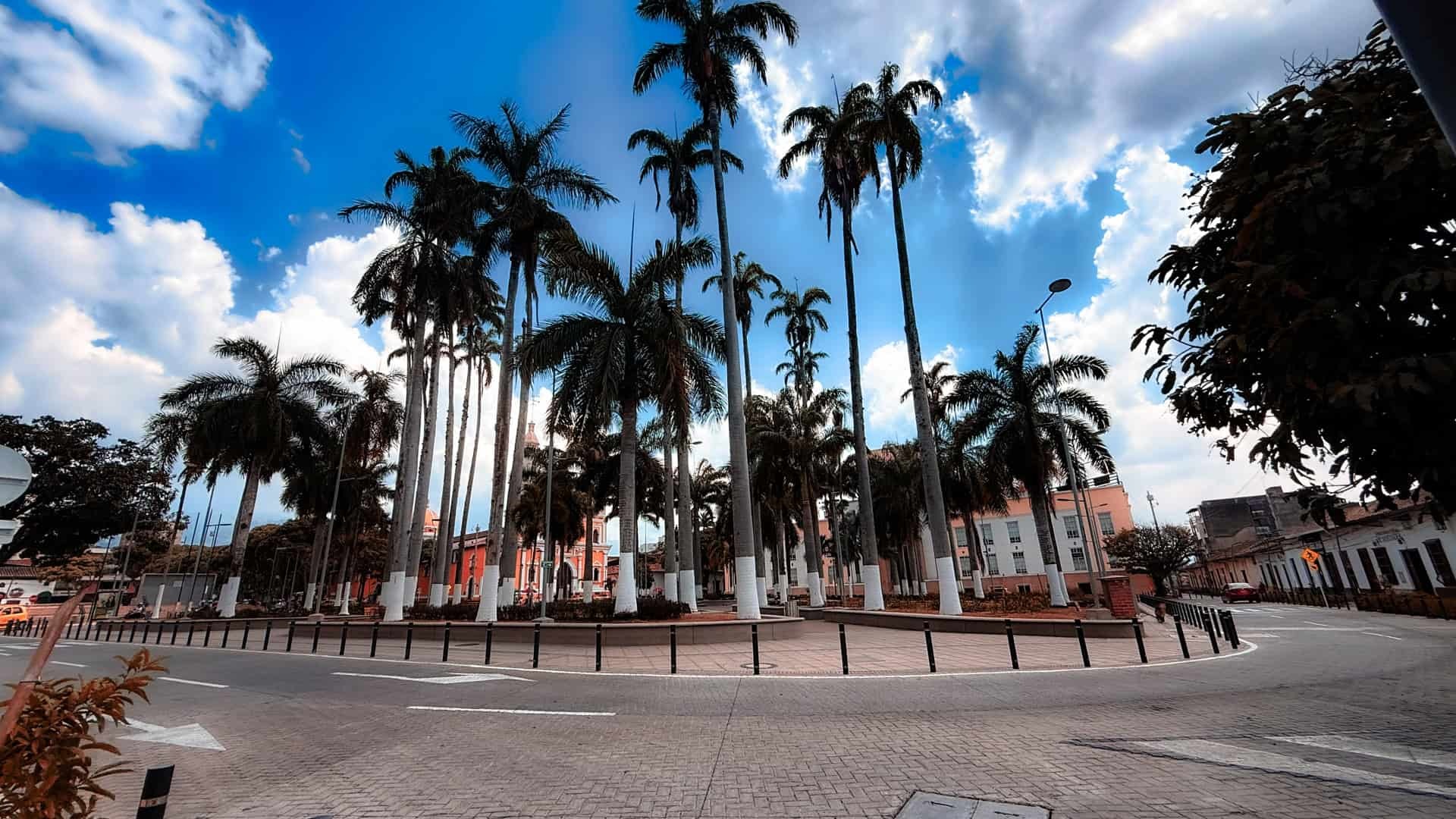
Bucaramanga is a beautiful city but east of the city is the best place to stay as a nomad. There are three neighbourhoods that are connected and make up the east of the city; El Prado, Cabecera del Llano and Sotomayor. Anywhere in these three is perfectly fine but if you’re going to be picky then Cabecera is the best of the three.
This is the nicest neighbourhood and, if the option is there, get a gaff on Carrera 39, really nice street.
- High quality living
- Proximity to co-working spots
- Great cafés and restaurants
- More expensive
- Traffic can get a bit much sometimes
This is where I stayed and is the northern-most of the three neighbourhoods and where I stayed the last time and borders Cabecera. It’s a little bit further away (15-minute walk) from the co-working hotspots than Cabecera but honestly I wouldn’t have even known these three were separate neighbourhoods before writing this report. There’s hardly any difference between them, where you’ll notice a difference is, if you end up on a street packed with bars or not. My advice would be to ask your Airbnb host what street the property is on (if it’s not stated on the listing) so you can check it out on Streetview.
- Conveniently in-between Centro and Cabecera
- Quite & residential
- Affordable high quality airbnbs
- The best co-working spots are a 15-minute walk or so
The last in the “top 3” for nomads. Sotomayor is much more residential and quieter. It’s a strangely shaped neighbourhood stretching almost the whole length of Bucaramanga – but the southern part (south of Parque de Las Mojarras) is the place to be.
- Peaceful residential vibe (in the south)
- Still close enough to Cabecera but super quiet
- Great for long term stays
- Less adapted to nomads, fewer options
Centro Histórico is no different to other historical centres in LATAM cities: over-crowded, generally unsafe and loads of traffic. It’s the cheapest part of the city to live in and for good reason, I’d personally advise against it.
There is an exception and that’s just on the south-west corner of Centro where it meets Garcia Rovira. There’s a really nice area immediately south of Parque Garcia Rovira centred around Carerra 11 and Calle 41. If you look on Google Street View, it doesn’t look that great at all, but you can see the evidence of works going on, which as of now is finished and it’s a beautifully restored colonial part of the city away from the craziness of Centro.
- Very affordable accommodation
- Markets and local restaurants
- Chaotic and doesn’t feel safe
- Distinct lack of co-working options here
Actually a separate city, but if you search for Airbnbs in Bucaramanga, you’ll get a lot of options showing up in Floridablanca, which is a bit cheeky considering they’re completely different cities.
- Suburban vibes
- A lot less traffic
- More peaceful and modern apartment options
- No nomad community
- Not as walkable, you might need transport
Is Bucaramanga safe?
Bucaramanga is one of Colombia’s safest cities and even more-so if staying in the “top 3” barrios I mentioned earlier. That said, this is still Colombia and usual common sense applies; don’t be flashy and use your street smarts.
Centro certainly feels a lot less safe than the rest of Bucaramanga and whilst it’s fine during the day, I wouldn’t recommend venturing there late at night.
⚠️ Things to Watch Out For
- Pick-pocketing in busy areas – Markets, Centro Histórico and crowded buses can be prime spots. Whilst Bucaramanga doesn’t have a reputation for pick-pocketing, keep your bags zipped and in front of you.
- Night-time in Centro – Stick to well-lit areas and avoid the bus terminals on foot after dark.
Where To Work in Bucaramanga
Bucaramanga has really jumped on-board the co-working train and there are an endless amount of options from professional co-working spaces to cafés actively promoting co-working. You might spot the odd international co-worker but the majority of remote workers in BGA are Colombian.
ColorWorking Top Choice
Probably the nicest co-working spot in BGA and they have two spots on the same street. They offer a variety of options from hot-desking to private offices, a co-working café (with a great menu), meeting rooms and just about everything in-between.
HotelBGA
HotelBGA is a hotel with a dedicated co-working space just a few doors down from ColorWorking, with flexible pricing starting from $20,000COP (about £4) per hour.
Café Bajo Sombra
My office of choice, this is a fantastic café in the south of Cabecera that specialises in seriously good coffee and a great food menu too. Later in the evening it certainly attracts BGA’s in-crowd but in the day it’s relatively quiet and you can hotdesk there from when they open at 8:30am until 3pm, where they’ll ask you to close up shop as they get busier.
There are loads of other options too: Verde Colab, Espacio Komún, Empapelarte and an endless supply of co-working friendly cafés.
Things to See & Do in Bucaramanga
Now… on the surface, Bucaramanga might err on the side of boring for some. If you’re looking for a city that’s absolutely going off with touristy stuff every day, then you are going to be disappointed. For example; search Medellín on GuruWalk.com and you’ll get 37 results. Bucaramanga? Zero.
But, fear not, there’s lots to see and do!
🏞️ Parque Nacional del Chicamocha
Home to Chicamocha Canyon which is the second largest canyon in the world and there’s no shortage of things to do here. A myriad of options including a cable car, hiking trails, ziplines and more.
It’s about 50km outside of Bucaramanga, so about a 90-minute drive in each direction, depending on traffic.
🏛️ Girón
Formally San Juan de Girón, this absolutely stunning colonial town is about a 15-minute Uber from Bucaramanga and it’s mix of whitewashed buildings, cobbled streets and peaceful atmosphere is well worth a half-day trip. Note that Girón is a cash-only town, so come loaded with pesos. Visit Parque Principal (the main park) on a Sunday afternoon/evening for some exceptional people watching.
🌸 Barichara
Further afield (about a 3-hour drive) is “Colombia’s most beautiful city”. I didn’t have time to visit and I’m really sad to have missed it, but I’ll definitely be coming back to Bucaramanga in the future, so this is at the top of my list. Due to the long drive from Bucaramanga you’ll need at least an overnighter to fully experience it.
Tip: Walk the Camino Real, a scenic 2-hour trail from Barichara to Guane, another picturesque village. There’s a bus from Guane back to Barichara too.
🤔 What else?
Bucaramanga is home to over 160 parks and is the capital of the Santander region which has another 20 or so more notable cities that are worth visiting. There’s honestly so much to see and do here, you’ll be busy for months – but you’ll just have to try a bit harder than usual to find it all.
My top tip? You’re best to head to the main tourist information centre, Instituto Municipal de Cultura y Turismo which is located next to Parque Los Niños and ask for some tourism maps. I picked up three; one of the main city, one of the nearby towns and then a larger one of Santander departamento (the “county” or “state” that Bucaramanga occupies). Once you have these, you begin to realise the scale of this place and how much there is to do.
Food & Drink in Bucaramanga
Food in Bucaramanga doesn’t differ much from the rest of Colombia but there are some specialties native to Santander. But the interesting thing about Bucaramanga? They are obsessed with burgers. Like, it’s an unofficial national dish and many local places all vie to be the best burger spot in Bucaramanga.
But, beyond burgers (see what I did there), the city is home to trendy cafés, traditional restaurants and a host of craft beer bars.
Must-Try Dishes
- Cabrito (Roast Goat) – Yep. The signature dish of Santander, usually slow-roasted and served with arepas.
- Hormigas Culonas (Big-Ass Ants) – Yes, literally giant roasted ants with big booties. A Santander specialty, people eat them like peanuts with a beer. No, I didn’t try them and no, I will not be trying them. Thank you.
- Pepitoria – A rich Santander-style rice dish made with goat offal, rice, and spices. It’s often served alongside cabrito (goat).
- Arepa Santandereana – Unlike the soft arepas found elsewhere in Colombia, this version is thick, crunchy and stuffed with pork cracklings (chicharrón). Beautiful stuff.
- Burgers – I just can’t believe that nobody has opened a place called Burgeramanga. Honestly, I’m wasted talent sometimes.
🍔 Best Burgers in Bucaramanga
You cannot leave Bucaramanga without trying at least a few of their famous burgers.
- Hamburguesas El Garaje – One of the most famous burger spots in Colombia. It’s so good, they have three spots in BGA, but you want the OG in Cabecera for the best experience
- MrBeast Burger – Yeah I thought this was a copyright infringement but MrBeast has a burger chain in Colombia. I’ve seen it all now.
- Nativos Burger – Absolute gut busters.
- Pa’ Carnivoros – One of Bucaramanga’s most popular burger spots.
And there’s way more too. I just would’ve died if I tried any more triple-stacker burgers.
☕ Best Cafés in Bucaramanga
Bucaramanga has a strong café culture, with some of the best specialty coffee spots in Colombia outside of Bogotá and Medellín.
- Bajo Sombra – My favourite coffee shop and also very laptop-friendly. Park up with your laptop anywhere from 8am till 3pm every day (after that it’s no more co-working).
- Cafe Forrestal – This is a small chain in Bucaramanga, but the one on Calle 48 was my favourite.
- Hey Café – Right in the middle of Centró, but great food and coffee.
- 1991 Café | Pan & Pan – Quiet little coffee shop with incredible sweet bread.
- Kōri Café – A traditional Japanese café, for something a little different.
- Cafetopía – Really nice spot, just make sure you ask for permission before whacking out your laptop.
- Aura Pasteleria – This is an Instagrammer’s heaven. Not somewhere you’d go with your laptop but if you’re craving European style pastries, this is the one.
🍽️ Best Bars & Restaurants
On this occasion, I didn’t step foot in a single bar or restaurant whilst I was in BGA, so I will have to divert your attention to TripAdvisor or Google Maps. Be weary of Trip Advisor though, there is a lot of outdated information on there.
 My Favourite Spot in Bucaramanga
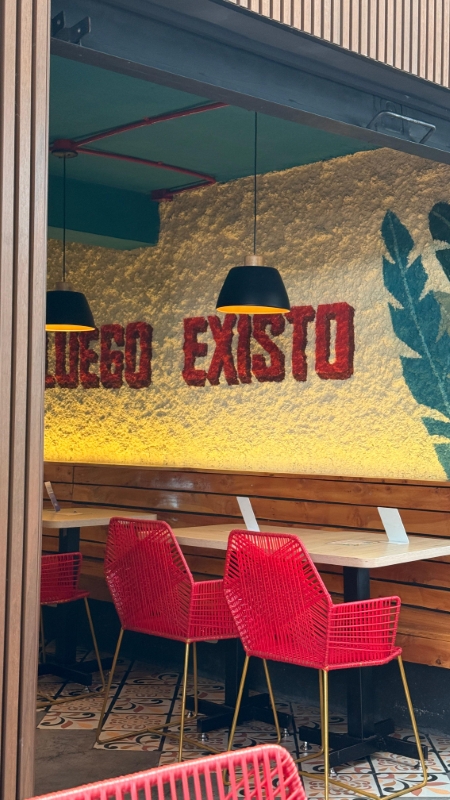
Café Bajo Sombra is a great café with an amazing menu – they roast their own coffee too! From the hours of 8am till 3pm they actively encourage people to work from here, afterwards they kindly ask that you move on. I went here multiple times whilst in BGA and thoroughly enjoyed it.
When To Visit Bucaramanga
Whilst Bucaramanga is known as The City of Parks and not The City of Eternal Spring (that’s Medellin), the weather here is very similar if a bit hotter, or at least in my experience.
Like most of Colombia, Bucaramanga has two seasons; the dry season and the rainy season. Thanks to it’s elevation of 950 metres it has a mild & temperate climate that doesn’t mimic the extreme heat of coastal desintations like Cartagena and not as cold as high-altitude places like Bogotá (2,640m) or Manizales (2,150m).
Best Time to Visit Bucaramanga
The dry season runs from December to March (only 4 months of the year) and temperatures hover around the low to mid twenties most days. You’ll still get the odd downpours but they’re infrequent and short. Obviously this also means it’s the busiest time of year to visit BGA, so make sure you book that snazzy Airbnb in advance (and no, I’m not telling you which one I booked, it’s mine 😈).
I visited in January for two weeks and it was clear sunny skies most days, sometimes overcast and rarely too hot. I think I saw maybe 2 or 3 downpours in two weeks, both at night and over in 30 minutes.
Other Times to Visit Bucaramanga
If you want a bit of a bargain and don’t mind the rain, then why not visit in the wet season? Wet season runs from April to November, just bear in mind it CHUCKS it down. May and October are reputedly the heaviest two months.
Climate by Month in Bucaramanga
| Month | Average High 🌡️ | Average Low 🌡️ | Weather 🌦️ |
|---|---|---|---|
| January | 27°C (81°F) | 18°C (64°F) | 🌤️ Mostly Sunny |
| February | 27°C (81°F) | 18°C (64°F) | 🌤️ Mostly Sunny |
| March | 28°C (82°F) | 19°C (66°F) | ⛅ Partly Cloudy |
| April | 27°C (81°F) | 19°C (66°F) | 🌧️ Showers |
| May | 26°C (79°F) | 18°C (64°F) | ⛈️ Heavy Rain |
| June | 26°C (79°F) | 18°C (64°F) | 🌦️ Light Rain |
| July | 26°C (79°F) | 18°C (64°F) | ⛅ Partly Cloudy |
| August | 27°C (81°F) | 18°C (64°F) | 🌦️ Light Rain |
| September | 27°C (81°F) | 18°C (64°F) | ⛈️ Heavy Rain |
| October | 26°C (79°F) | 18°C (64°F) | ⛈️ Heavy Rain |
| November | 27°C (81°F) | 18°C (64°F) | 🌦️ Light Rain |
| December | 27°C (81°F) | 18°C (64°F) | 🌤️ Mostly Sunny |
How To Keep Fit in Bucaramanga
Colombians love keeping fit and they worship cycling. Bucaramanga is no different. One thing that stood out to me was that I found an official Garmin shop, a run club and 2 cycle shops selling high-end MTBs and roadies, all on my first day.
👟 Running in Bucaramanga
 The City of Parks is, as the name suggests, home to a lot of parks, but none of them are really big enough to warrant a run-around. For example, Parque San Pio which is one of BGA’s biggest parks only has a perimeter of just over 500m.
Instead, if you’re wanting to get in some distances north of 5K, you’ll have to hit the streets and providing you stick to the east of the city, where it’s a bit less hectic, you’ll be fine for some pavement-pounding. Just note that BGA is super-hilly and your average 5K will almost always clock-in at least 100m of elevation gain.
BGA is home to a run club café called “Running Coffee” (Insta | Google Maps) and they have organised runs twice a day, every day!
The city also has a half marathon (no full marathon, I don’t think) each year in October, be weary that it has an elevation gain of almost 500m. For comparison, The Great North Run is 120m, and the NYC Half Marathon is 150m.
And if you love trail-running and hiking, then you’re in for a treat…
🥾 Hiking & Trails in Bucaramanga
Just a ninety-minute drive from the city is Chicamocha Canyon, the second largest canyon in the world and it is absolutely packed full of trails that you can walk or run but the daddy of them all is the Chicamocha Canyon Race which offers distances of half marathon, marathon, 80 kilometres and 100 miles.
Also worth noting is the Santander Trail Series which runs towards the end of the year offering a variety of trail races.
For the hikers, you have the aforementioned canyon, the Camino Real trail from Barichara to Guane (a few hours drive away), Camino La Barrosa and way, way more. As I always recommend, don’t leave home without the AllTrails app.
🚴 Cycling in Bucaramanga
As mentioned earlier, cycling is serious in Colombia and it’s no different in BGA. There are a network of cycle paths in the city that total around 50km and tonnes of routes on Strava that connect to other cities and take you up into the hills, too.
🏋️ Gyms in Bucaramanga
BGA is home to two major gym chains; SmartFit and Fitness 247. Personally I used Fitness 247 because they let you buy a one-off monthly subscription, whereas SmartFit locks you in to a year, although apparently it’s easy to get out of it. Both of them have gyms across Colombia and you can sign up for an unlimited pass that will grant you access to any of their gyms across the country – perfect if you find yourself travelling a lot. SmartFit is the better option here, due to extensive coverage across LATAM.
🧘 Other Options for Keeping Fit in Bucaramanga
There are plenty of other options too, whether you want to learn salsa, karate, MMA or something else. A quick search on Google or Google Maps will return a myriad of options for you.
Want to see more? View my postcards from Bucaramanga, here.
So, Would I Recommend Bucaramanga for Digital Nomads?
So, Would I Recommend Bucaramanga for Digital Nomads?- Getting There7/10 GoodWhile it has a major airport and bus station, most international flights require a connection through Bogotá or Medellín. Overland travel is also an option, with buses from major cities like Bogotá, Medellín, and Cartagena, though journeys can take anywhere from 8 to 12 hours. The airport itself is small and efficient, making it easy to navigate, with regular domestic flights and frequent connections to major international hubs throughout the day.
- Digital Nomad Visa Availability9/10 AmazingColombia allows remote workers to stay and work without special permissions, granting 90 days on arrival. This can be extended online for an additional 90 days, allowing a total stay of six months. Additionally, Colombia offers a formal digital nomad visa that provides up to two years of temporary residency. The application process is straightforward, the requirements are reasonable, the income threshold is low and approval times are reportedly quick. Given these factors, I’m giving this a 9, as it’s almost perfect. What's my benchmark for 10? Georgia - 1-year on arrival, work remotely no questions asked.
- Co-Working Suitability8/10 Very goodThe city has excellent internet and many cafés welcome remote workers, with some even actively encouraging it. There are also a few high-quality co-working spaces, and as the city's popularity grows, this is likely to improve even more. While there are no major chains like WeWork or co-living spaces yet, it’s a great option if you're comfortable living and working independently.
- Internet Connectivity9/10 AmazingInternet connectivity is excellent, with most fixed connections exceeding 100 Mbps and fibre widely available across the city. Mobile coverage is strong, with 5G widely deployed, I recommend Claro for your SIM.
- Safety & Security7/10 GoodOne of Colombia's safest cities, particularly in the east, where it feels more like a small peaceful Spanish city. Overall, it feels very safe, but areas closer to the centre can be less secure. It's important to stay aware in busy areas, avoid complacency and keep your street smarts in mind.
- Things To Do7/10 GoodThere’s not much to do in the city from a tourist perspective, but it’s well-suited for long-term living. However, if you enjoy hiking, adventure sports, and outdoor activities, the surrounding areas and nearby towns offer plenty of options.
- Culinary Scene6/10 NormalThe culinary scene is OK. It has fantastic cafés, bistros and some high-quality restaurants. A variety of cuisines are covered too from Italian to Japanese and local options too, but fine dining options are limited.
- Affordability8/10 Very goodOne of the most affordable major cities in Colombia, with costs averaging around half that of Bogotá or Medellín. This affordability extends across the board: rent, taxis, shops, cafés and restaurants are all very budget-friendly, making it an excellent choice for long-term stays without breaking the bank.
- Getting Around7/10 GoodUber and Didi are both available in Bucaramanga, and you can also use Uber to book local metered taxis. Traditional taxis are abundant and easy to hail, running on a meter system. Only UberYa and Uber Comfort are available (there’s no Uber Black) but the overall quality of Uber cars is good, and drivers are generally reliable. I read about a bicycle-sharing system but found no evidence of it in the city. There's about 50KM of cycle paths around the city and it's very walkable. Traffic is fine most of the time, noticeably worse in centro but fine elsewhere.
- Community6/10 NormalThere’s a small expat community, though it’s mostly made up of retirees rather than digital nomads. The majority of remote workers I encountered were Colombian, and I didn’t find much of a dedicated nomad scene. Because of this, integrating as a short-term visitor could be challenging, especially if your Spanish skills are limited.
- Climate8/10 Very goodA warm, spring-like climate year-round, with temperatures typically ranging between 20°C and 26°C most of the time. Rainfall is fairly consistent and predictable, with wetter months usually between April–May and October–November, but showers tend to be short-lived rather than all-day downpours. Humidity is average at around 60% and not too painful.
The Good
- One of the safest and most liveable cities in Colombia
- Mild climate year-round, similar to Medellín, which is billed as the City of Eternal Spring
- Great café culture and co-working is actively encouraged, without a massive influx of nomads
- Endless amount of options for outdoor pursuits
The Bad
- Not a huge tourist city: if you love that big city life like Medellín or Bogotá, you'll be disappointed
- Hilly terrain: great for fitness but can be tiring
- Limited nightlife when compared to some of Colombia's biggest cities, but still plenty of options