


The Marathon des Sables, often labelled as “the toughest footrace on earth”, is a 250km multi-stage ultramarathon across the Moroccan Sahara, and yep, I just did it and I’ll never do it again 😂 (I mean, I probably will, I’m already starting to think about it with rose-tinted glasses).
Introduction
I took up running during the pandemic, just like everybody else, and as the months went by, I realised I really enjoyed long-distance. Just six months into my running journey I completed my first sub-4 marathon, and a few months after that, I ventured into ultras, and I never looked back. Like many, I needed a goal to aim for. I’d done three marathons by this point and two single-stage ultras. I wanted MORE. More pain. More misery. More training. And that’s when I remembered this charming little documentary called “The Toughest Race on Earth” about this multistage ultramarathon in the Sahara Desert. I further recalled watching this chap pop his own blisters on TV and thought, “Lovely jubbly”.
So, I sent my boss a Teams message with a proposal to see if they would cover the cost of the entry fee and flights. The MDS is also comically referred to as “the CEO race” because it costs £4,500 just to enter. In return, I’d make sure nobody could turn a head for a year without seeing me prancing around in a company-branded t-shirt. Unfortunately, it worked. My employer agreed to cover the fee, and I held up my end of the bargain too: twenty-seven features in print, TV, online & radio over the course of the year in the BBC, Jersey Evening Post, Guernsey Press, Bailiwick Express and just about everything in between.
The fee covers the race entry, charter flights from Gatwick, transfers and two nights in a 5-star hotel in Ouarzazate after the race. Very nice, indeed. But the expenditure didn’t stop there…
Table of Contents
- Introduction
- The kit
- The food
- The training
- Leading up to the race
- Day 1
- Day 2
- Day 3 – Stage 1 – 31.1km and 282m elevation
- Day 4 – Stage 2 – 40.8km and 550m elevation
- Day 5 & 6 – Stage 3 – 85.3km and 1,154m of elevation
- Day 7 – Stage 4 – 43.1km and 390m of elevation
- Day 8 – Stage 5 – 31.4km and 252m of elevation
- Day 9 – Stage 6 – 21.1km and 160m of elevation
- Transfer back to Ouarzazate
- Final Day
- Heading home
The kit
The MDS is a self-sufficient race, and you have to carry everything you need for a week, minus your tent. Weight. Is. Everything.
At the cheaper end of the scale, I think you could just about squeeze everything you need for £500, but I wouldn’t recommend it. Realistically, you could be looking at up to £2,000; I think I spent around £1,200. It’s such a huge and expansive subject, but my key takeaways are:
- Every gram counts, so shave off what you can, no matter how little.
- Yes, that superlight sleeping bag is twice the price, buy it.
- No, the desert isn’t as cold at night as they say it is.
- No, you don’t need clothes to change into at the bivouac, just live in the same clothes for a week, you’ll get over it.
- Yes, bring some light slippers or sliders to give your feet a break.
- Pack the absolute bare minimum; time goes quickly at the bivouac, and there’s plenty to do and lots of people to talk to.
- You don’t need an inflatable mattress; it will almost certainly pop (twice), a superlight foam sheet from Exped or similar will be plenty.
- You will want an inflatable pillow, though.
- Train in full kit as much as you can, and once you’ve found your happy place, change nothing; don’t even move something to another pocket.
- Train. On. Sand. It’s baffling the number of people that will tell you that you don’t need to!?
The other huge factor in this is your food…
The food

Most people will be living off of dehydrated foods from the likes of Expedition Foods, Firepot and Real, to name a few. They’re the easiest way to get a decent amount of calories and still have something relatively normal for dinner. The rules state you have to carry a minimum of 2,000 calories per day of the event (7 days), whilst you are in the desert for two days before the race, you can bring as little or as much (definitely load up here) food as you want. I really cocked this up to be honest; I don’t know why, but I brought a limited amount of food with me for the two days before the event, so I was literally scrounging food from people!? You don’t move or run on the first two days, so size and weight won’t matter. Bring an entire picnic with you (my tentmate, thankfully, did). My second mistake was that I limited the majority of my caloric intake to pre and post-run; my daily intake was this:
- Breakfast pre-run: 800kcal dehydrated porridge
- During run: 320kcal Maurten Drink (disgusting), 260 kcal Clif Bar (heaven), 186kcal Beta Fuel Energy Chew (also, heaven)
- Post-run: 1,000kcal dehydrated meal
What would I have changed if I did it again?
- Breakfast pre-run: 400kcal dehydrated porridge (less to wolf down in the morning)
- During run: No Maurten energy drink, bleurgh. I would’ve made my running fuel total about 1,000kcal and broken it up into lots of little varied sources: jerky, dried fruit, sweets, flapjacks, etc
- Post-run: 400kcal dehydrated meal plus a 200kcal supper later on
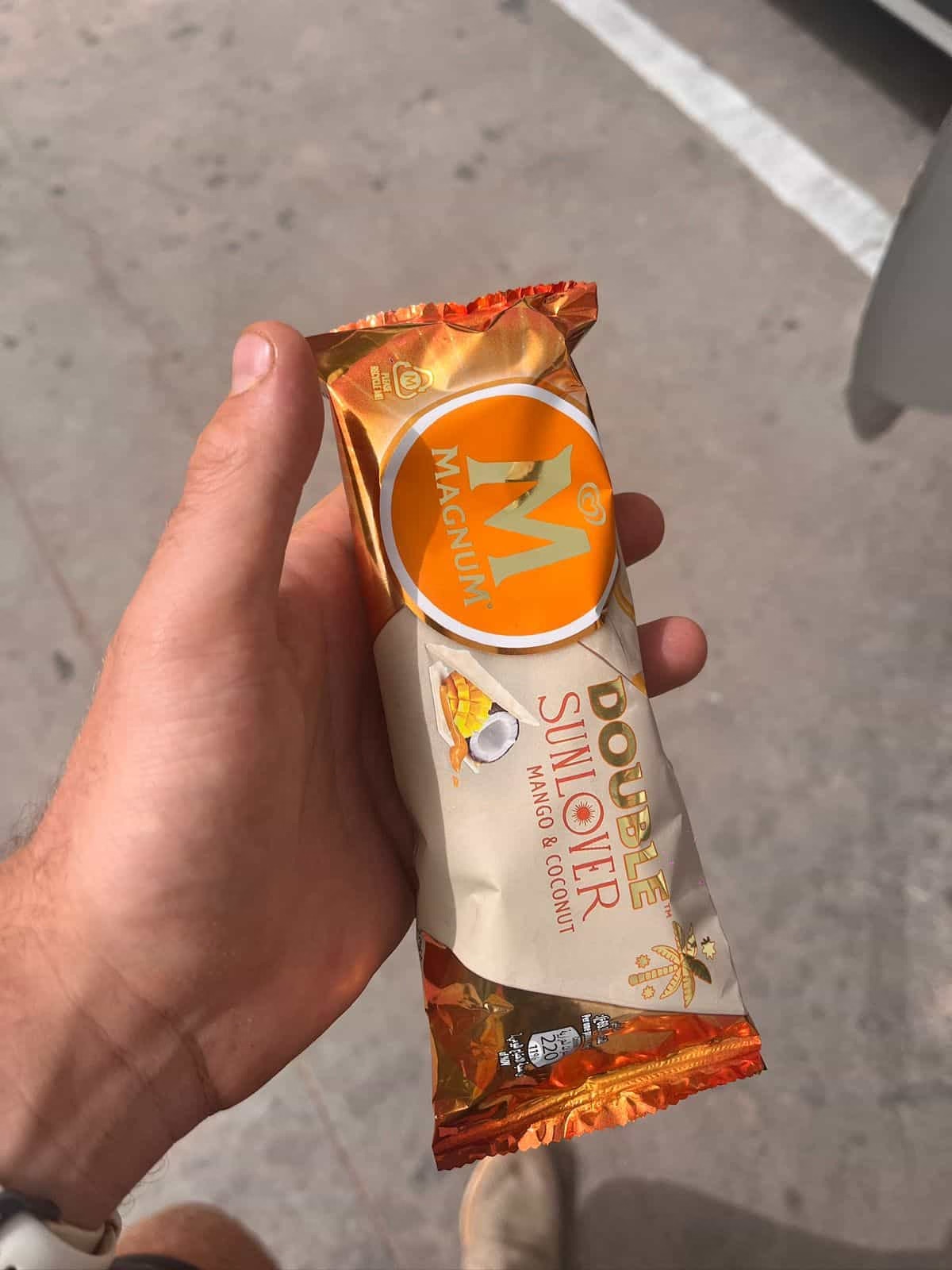
I also would have spent a lot more time and money ensuring I had very different food every day. Food is your only escape in this adventure that will not only wreck you physically but emotionally, too. After 9 days of gels, lukewarm water and rehydrated food, I shed a tear on a fuel forecourt floor as I ate a Magnum ice cream at the end. I’m just thankful nobody got that on camera 😂
The training
I started training around June, 10 months before the race. The plan was to break my training up into two blocks, one to build up a decent base fitness over 4-5 months, peaking at about 100km a week and tapering down, then starting again but with a backpack and about 20% more mileage. Phase 1 of the block went almost flawlessly. I covered over 90% of my scheduled runs and mileage, with 5 runs a week for about 5.5 months. Phase 2… well… it just didn’t really. Phase 1 finished with a local single stage ultra that I’d done before. I knew I was ten times fitter than the last time I did it, so I was super, super confident. Arrogant, even. Long story short, I didn’t even finish. I set off too slow in the first half, and I had to run the second half so quickly I bonked and went flying down a flight of steps, twisting my ankle in the process. Maybe I could have finished, but I would have been at least an hour past the medal cut-off time (7h) and lucky to have finished before the deadline (9h), so I pulled out at 35km with 20ish to go.
Anyway, phase 2. So I took about a week off of running after this point and then got back to business. I adjusted to training with a backpack on, but wow, what a difference just 2kg made, and I needed to get up to 10kg! About a month into phase 2, I then went backpacking in South America and had loads of hiking scheduled during the week alongside my typical long runs at the weekends. But, you know what I didn’t factor in? Most of my weekends were spent at 3,000-4,000m above sea level, and I can assure you, running at that altitude with 10kg on your back is a no-go. I missed out on about 4 weeks of long runs in total, with my weekly total distances at around 20km of running and about 50km of walking and/or hiking, which is not ideal. When I came back, I had about 3 months to go until the main event, so I scaled up the running again, and on the second week, I hit an 80km week with a 50km long run. As a result, my ankle finally gave out. It’s not a new thing for me; I’ve had the issue since I was a child: a very high arch (“pes cavus”) coupled with a subtalar joint that just doesn’t move. The subtalar joint is responsible for allowing your ankle to roll from side to side, which is especially crucial in trail running on uneven terrain. This time, I’d finally taken it too far, and it resulted in an entire month off of running (about six weeks out at this point) and an arthritis diagnosis. All my motivation disappeared, and what had gone from excitement turned to complete fear: fear of failure, fear of letting the charities down, fear of shaming myself, my employer – all of it. I didn’t realise it at the time, but yeah, I was terrified, and I’d never experienced stress quite like it. I spent a lot of time in physio, and I had a few rounds of corticosteroid injections. It seemed to get rid of the worst of the pain, and we were back to training, but I was so far behind. Whilst there’s no science to it, I do obsess over my Strava Fitness score. Before a big race, my score is anywhere between 100 and 150. I was at 55, and I had 30 days till the race, and by the time the MDS came around, I was at about 75. Far from ideal.
What would I have changed if I did it again?
I would have invested in a proper training plan from somebody that had done it before, rather than trying to hack together my own version, that’s for sure. The other things I can’t really control, so it’s unreasonable to say I’d change much else. I’d say to incorporate more strength training, but I find it mind-numbingly boring, and I’m not a professional runner, nor do I have aspirations of being one.
Leading up to the race
Anyway, my bags are packed, and thanks to my employer’s remote working policy, I spent two weeks in Morocco’s capital, Rabat, for some sun, a change of scenery and warmer training. Tt really gave me a spring in my step, if you’ll excuse the pun. At the end of my two weeks, it was time to make my way to the race, which started with a drive from Rabat to Ouarzazate (“OZZ”), which is about 6 hours in total. I love driving abroad, and this was a true highlight. I stayed in a guesthouse called Dar Amoudou after the drive, before meeting the British contingent at OZZ airport the following morning.

Day 1
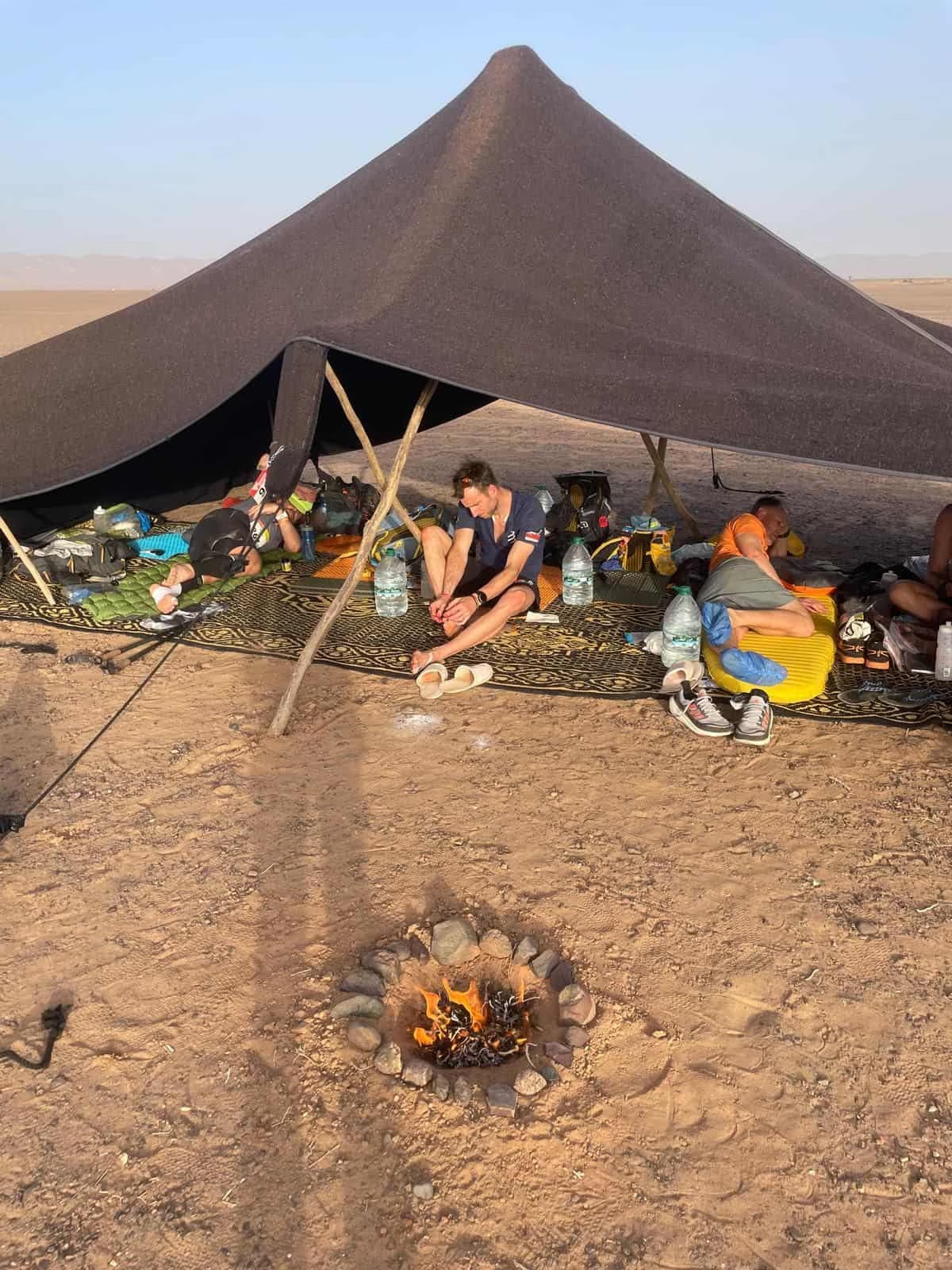
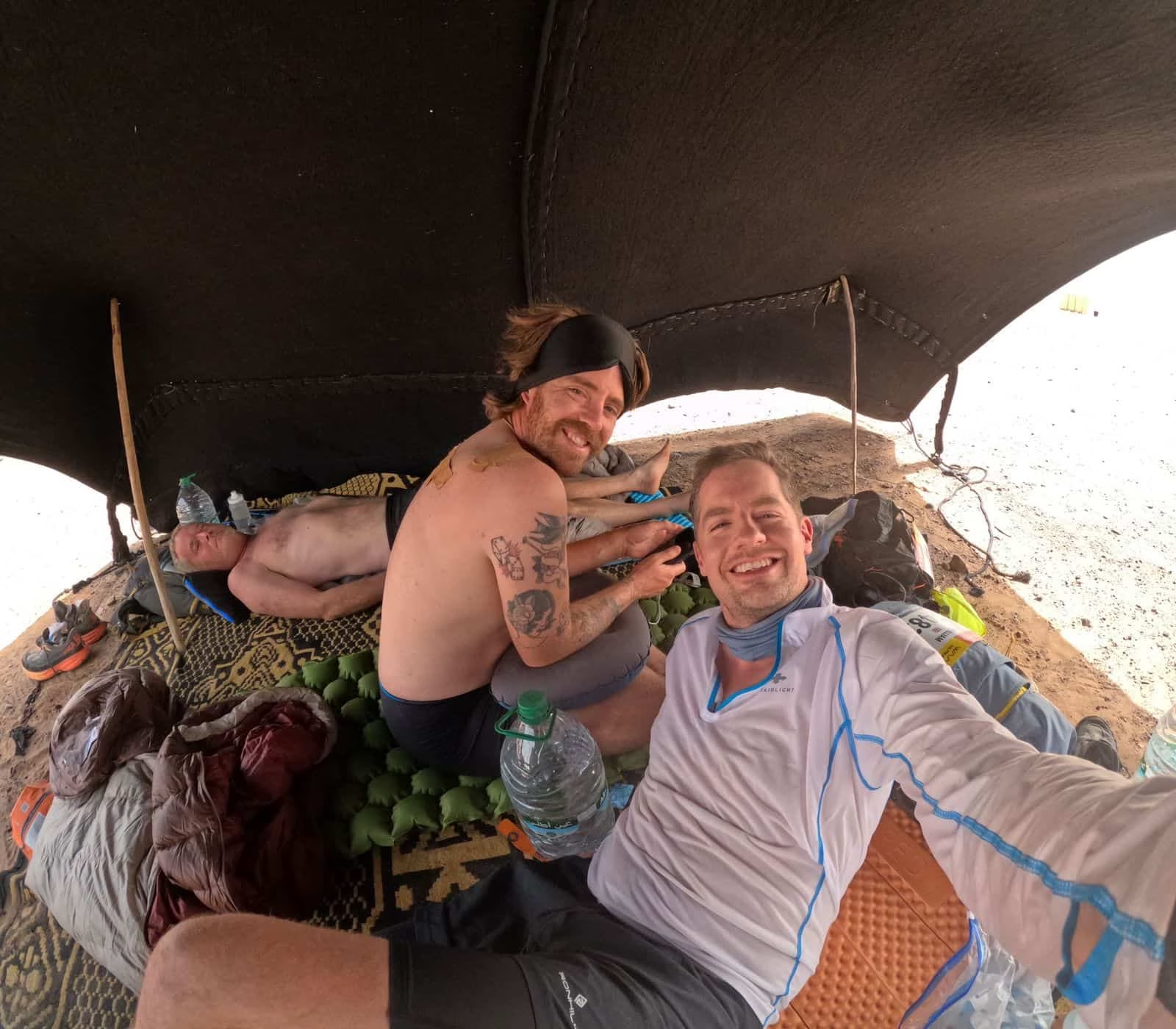
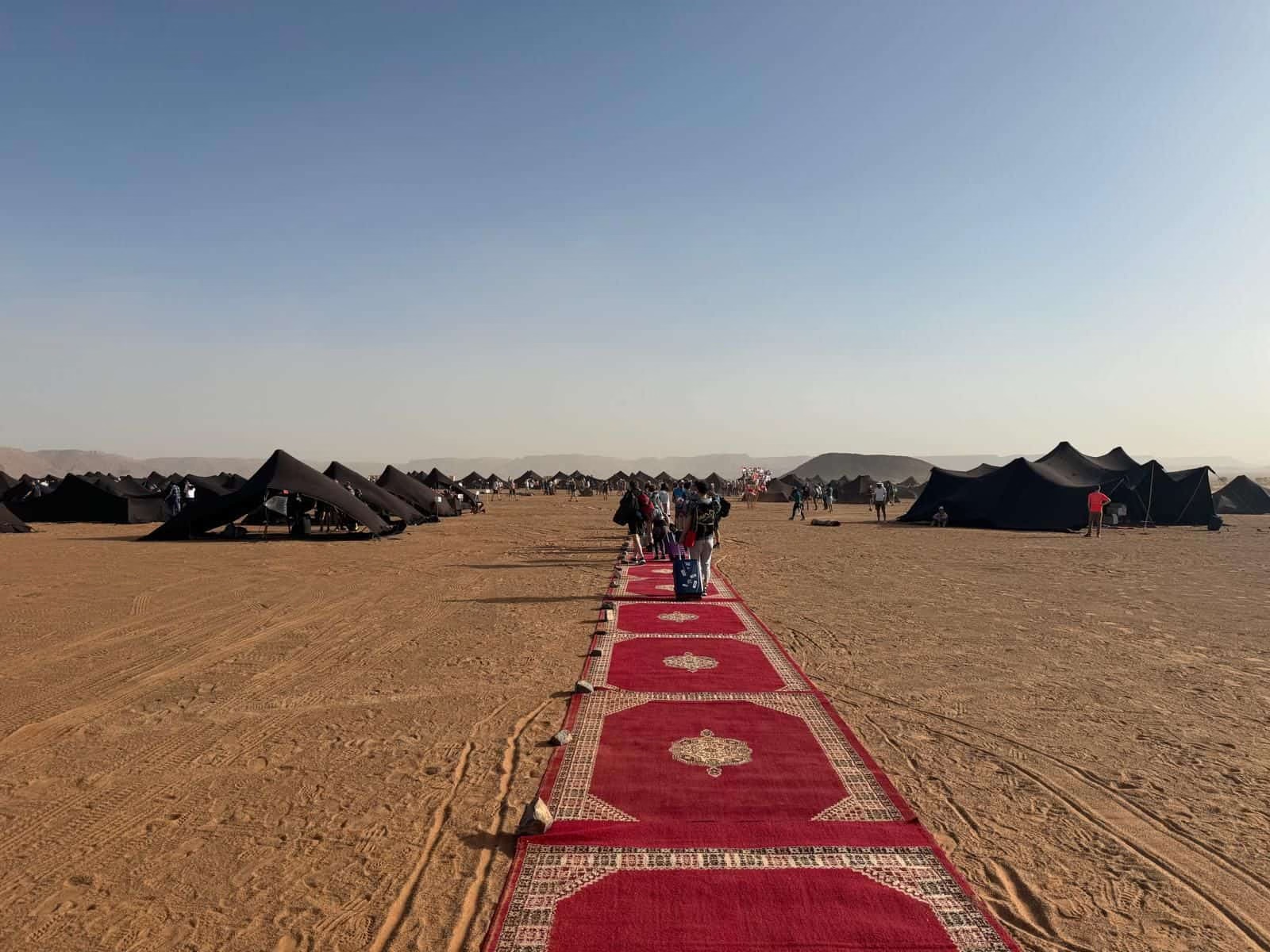
The charter flight arrived into OZZ, and I hopped onto one of the MDS buses, where we drove out to the edge of civilisation, somewhere near Tafraout Sidi Ali, about 40-50km from the Algerian border. The bus ride wasn’t actually all too bad; it was about 5 hours in total on the road, with a lengthy stop halfway where I bought the last Magnum I was going to see for a week. We were given a packed lunch when we boarded, which consisted of bread, tuna, spreadable cheese and some mixed fruits & nuts. This is where you are given a copy of the famed “road book” that details everything you need to know about the event and the course itself, with detailed maps. We arrived to the bivouac at about 2 or 3pm, and people continued to arrive for a few hours afterwards, greeted by local entertainers as you walked down a long red carpet, before heading to your “tent”. Our tent, or bivouac shelter, was a thick black rug held up by two poles and would be home to myself and 7 others for the proceeding 9 days.
Day 2


After settling in for the night, the following day came “technical checks”. In the past, this apparently took a few hours, but once we were called up, we were done in 15-20 minutes. It was incredibly smooth and one of the standout successes of the MDS under new stewardship. So good, in fact, that the first two days could’ve been merged into one, and I’m sure they’ll do that in future editions. You’re ushered to a series of tents one after another;
- The first tent checks your ECG reading and your medical report from your GP
- The next tent weighs your bag to make sure you’re within the limits, and if you’re unlucky, they’ll check the contents against the mandatory list
- There was a third tent, but I can’t remember what it was for
- You’re then fitted with a GPS tracker, which also includes an emergency help button and also allows friends & family back home to track your progress via a live website, updated every few minutes
- Lastly, you’re then photographed with your number. Apparently, as a memento, but others said it was so they could easily identify your body – lovely thought.
Later that afternoon, there was a briefing, which, in all honesty, was quite the snoozefest. They basically re-read the roadbook to us: the one we’d just read cover-to-cover on the 5-hour bus journey. Settling in for the night, I hit the hay pretty early as we’d be up at around 6:00am for the start of stage 1.
Day 3 – Stage 1 – 31.1km and 282m elevation

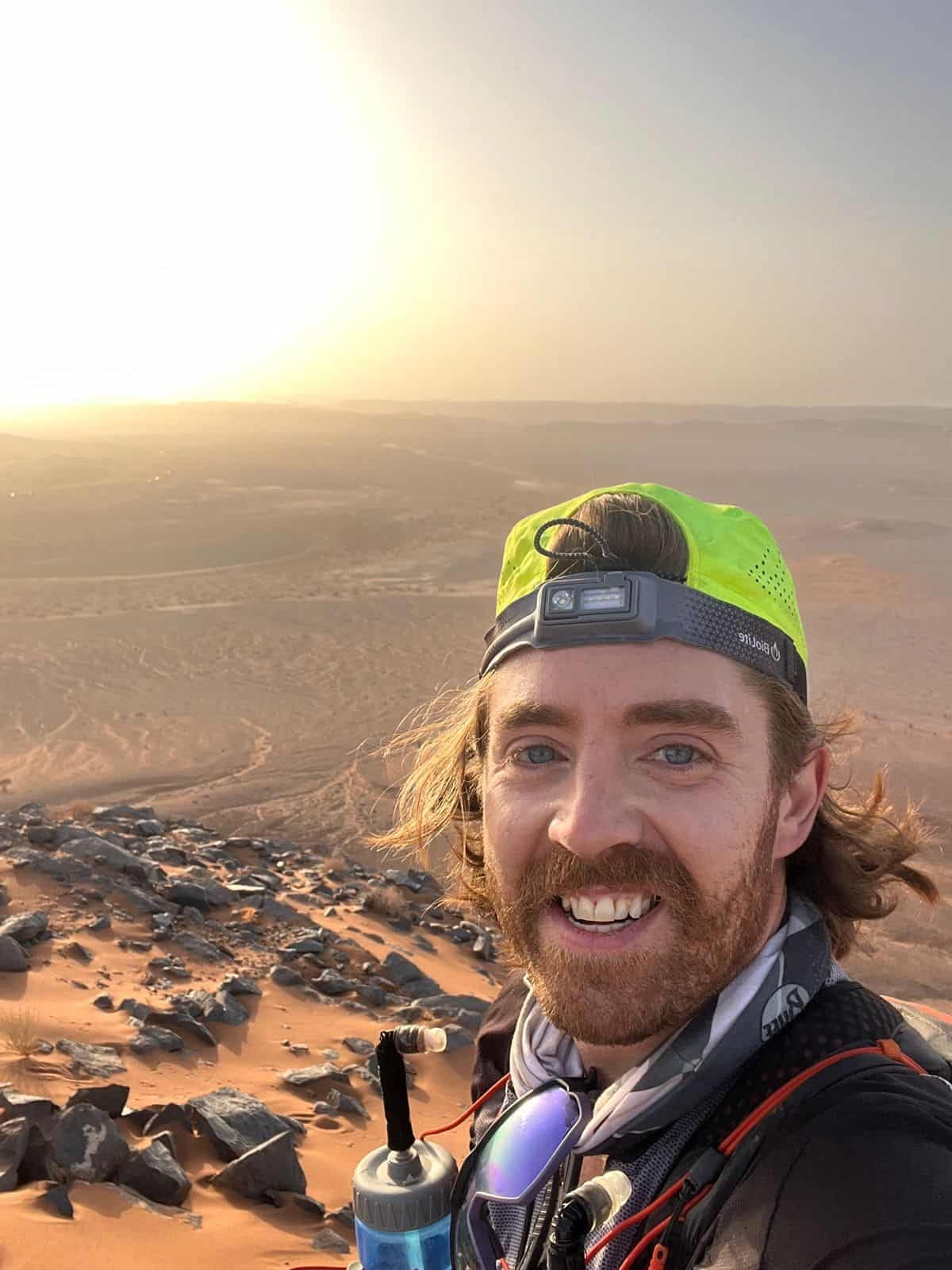

Easy numbers, I thought to myself, nice and easy start. We started with our stage briefing at 7am, and at 7:25am, now iconic, soundtrack of “Born To Be Alive” started playing as the organisers started dancing on the stage. A warm-up routine, we were told. Seconds before the race was when the real fun started; Highway to Hell by AC/DC plays and the race starts as the chorus kicks in, I never tired of it, it was an insane buzz. I crossed the start line, got myself into a rhythm and said to myself, “Let’s keep this in zone 3 at all times”. I settled into a pace of around a 7-min/km and was cruising. I was so hyped, and all of the fear had gone. As the kilometres passed and the heat increased, the reality started to settle in. I got to about 23km, and I was 3 hours in, and that’s when I boarded the struggle bus. Whilst the remaining 7km was quite easy terrain, there was an obscene headwind, something I’d learn was a very regular occurrence on the MDS and miraculously, always on the home straight. The remaining 7-8km took me 90 minutes; it was a hideous slog getting over the line. Finishing up in 4 hours and 45 minutes, just squeezing into the top half of the pack.
Day 4 – Stage 2 – 40.8km and 550m elevation
Up and ready to go again with a slightly earlier departure of 7am, this stage was unexpectedly difficult, a real nasty course. My ankle was behaving, not enough to count me out, so I headed out and ran for about 10km before being completely wiped out by endless sand. Interestingly, a lot of past competitors told me not to worry too much about the sand. I took that a little bit too literally and did zero training on sand – do not follow that advice. Maybe a third of the course is soft sand and it is absolutely draining beyond belief. In total, I think I ran about 25km, shuffled a bit and walked the rest. I crossed the line in a very pitiful 8 hours. This was the stage that really set the tone for me: “how could I not manage to complete 40km in a reasonable amount of time? I have done this over and over and over again, but I just can’t”, I thought to myself. This was when the realisation set in that I was so, so far out of my depth, and unfortunately, for the next few days, this negative attitude continued.
Day 5 & 6 – Stage 3 – 85.3km and 1,154m of elevation

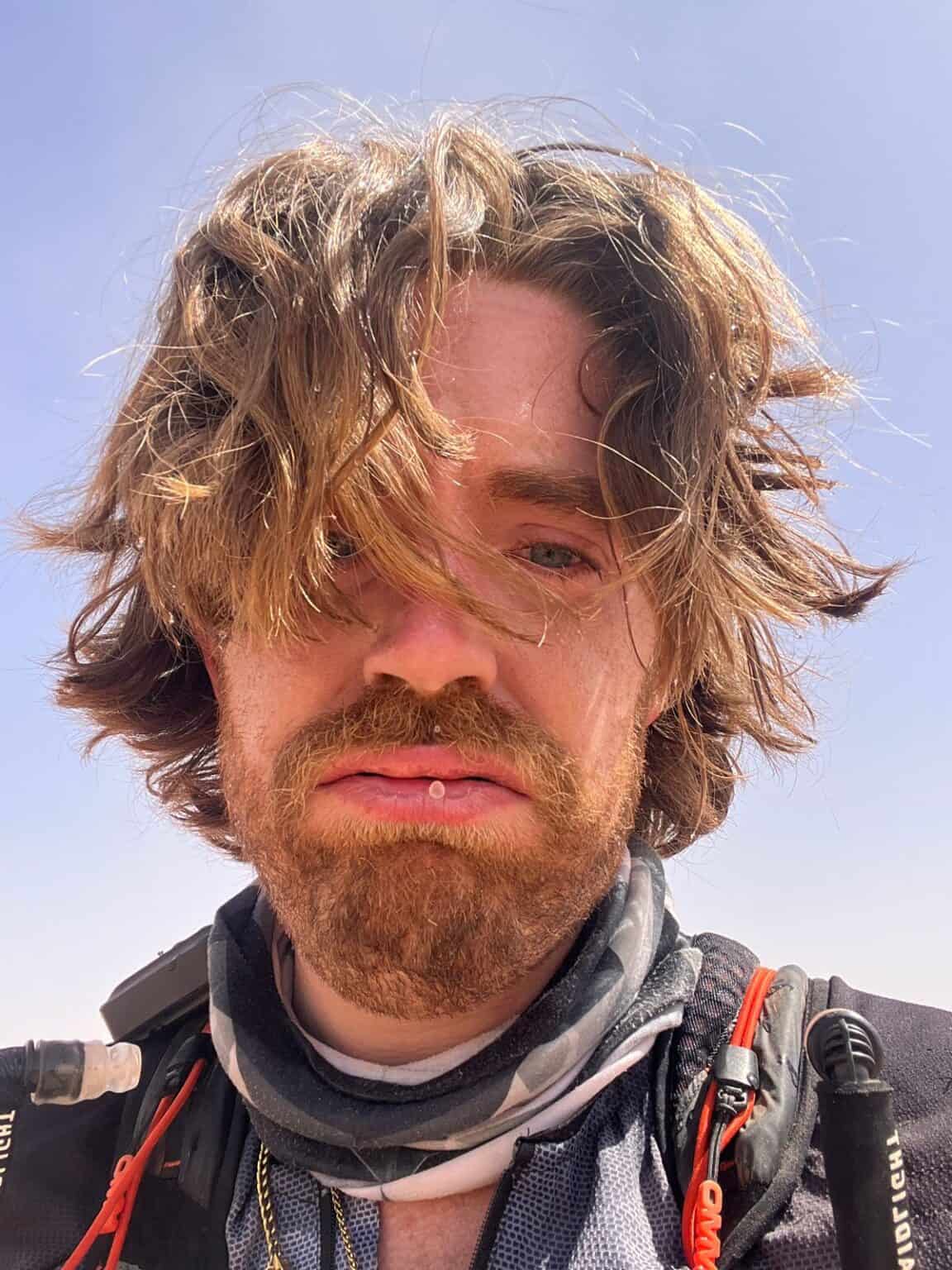
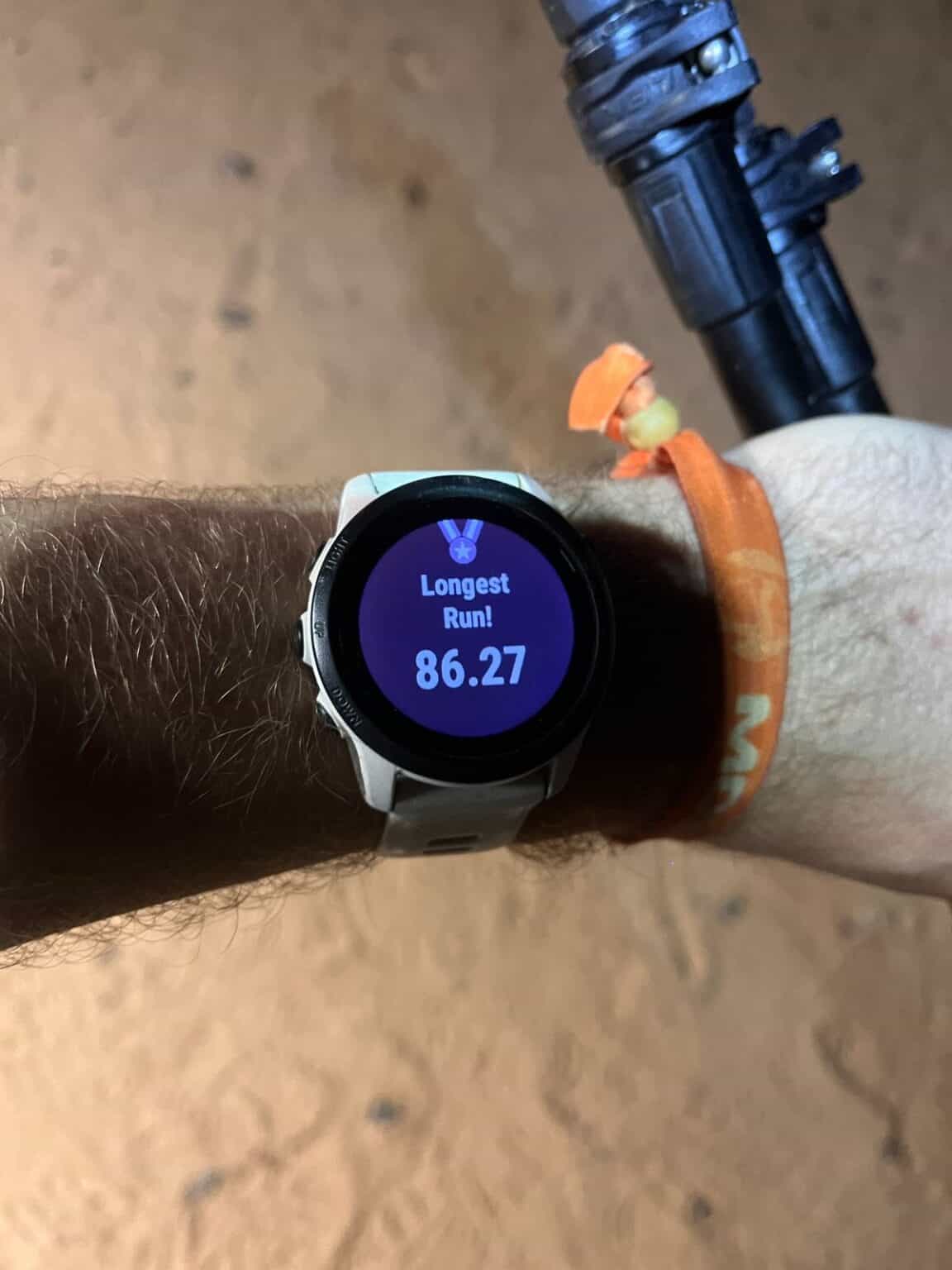
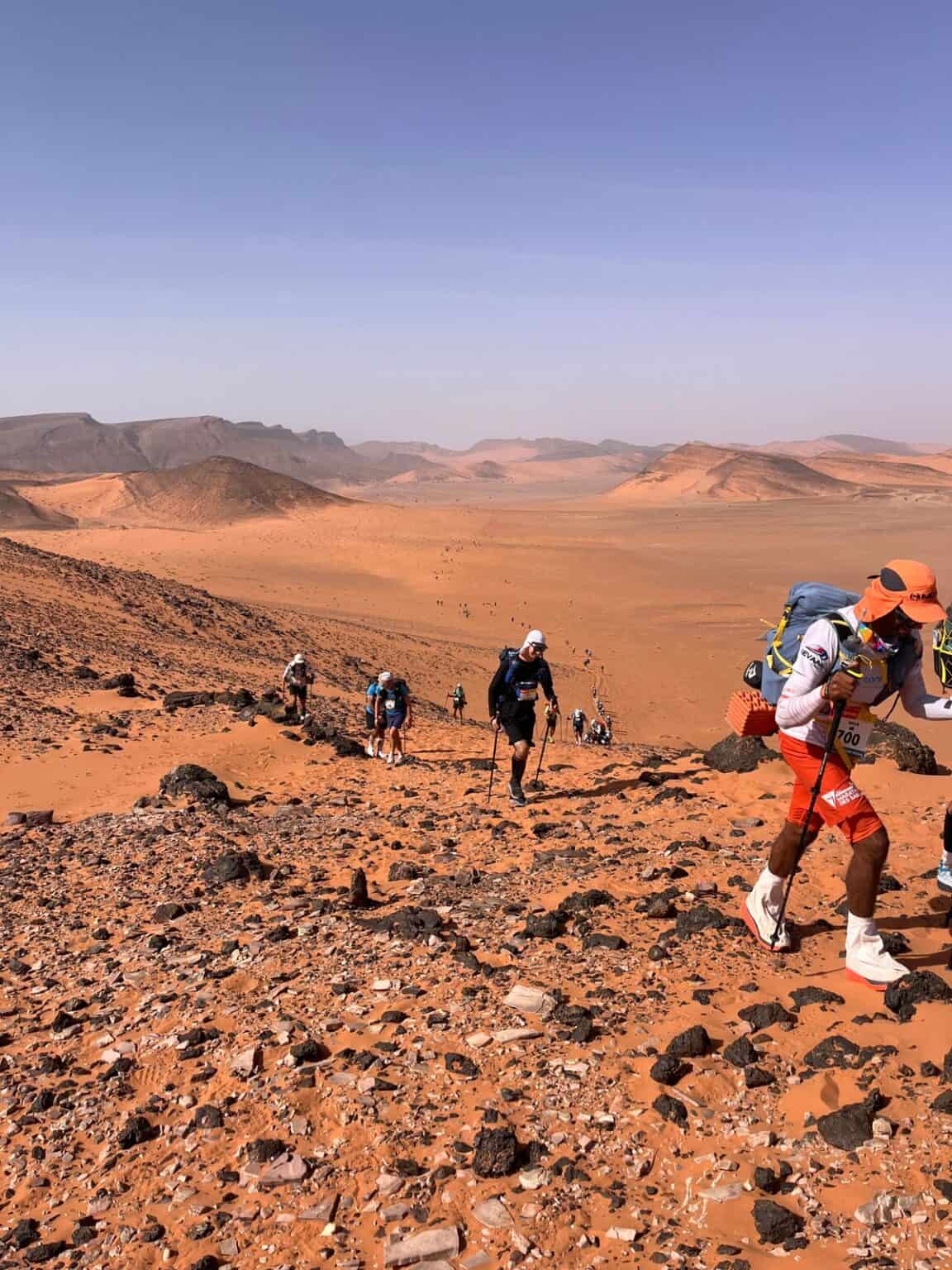

The revered long stage. What I, and likely everybody else, was dreading. Out of the door at 6am, I began what was probably the most physically and mentally enduring day of my life. As the saying goes, it’s a marathon, not a race, but this was two marathons. I switched between running and walking for about 30km, and by this point, it was midday, and the heat was well into the 40s. I just didn’t really have much left in the tank at this point, physically or mentally, and I couldn’t believe I still had over 50km to go. I thought to myself, I’ve done a 60K walk before, and I got it done in 11 hours; it’s not unreasonable to think I can comfortably bosh this out in 15. Oh, my sweet summer child, that’s not happening. 15h then became 18h, then 20h, and eventually, there wasn’t a time anymore. I just wondered if I’d be able to push myself through it! Especially towards the end, when I started passing people sitting with medical teams who had pulled out, getting a drive back to camp, the temptation was very, very high. I hobbled over the line after 23 hours and 43 minutes. At this point, I’d dropped 100-200 places; I was a broken man, to say the least.
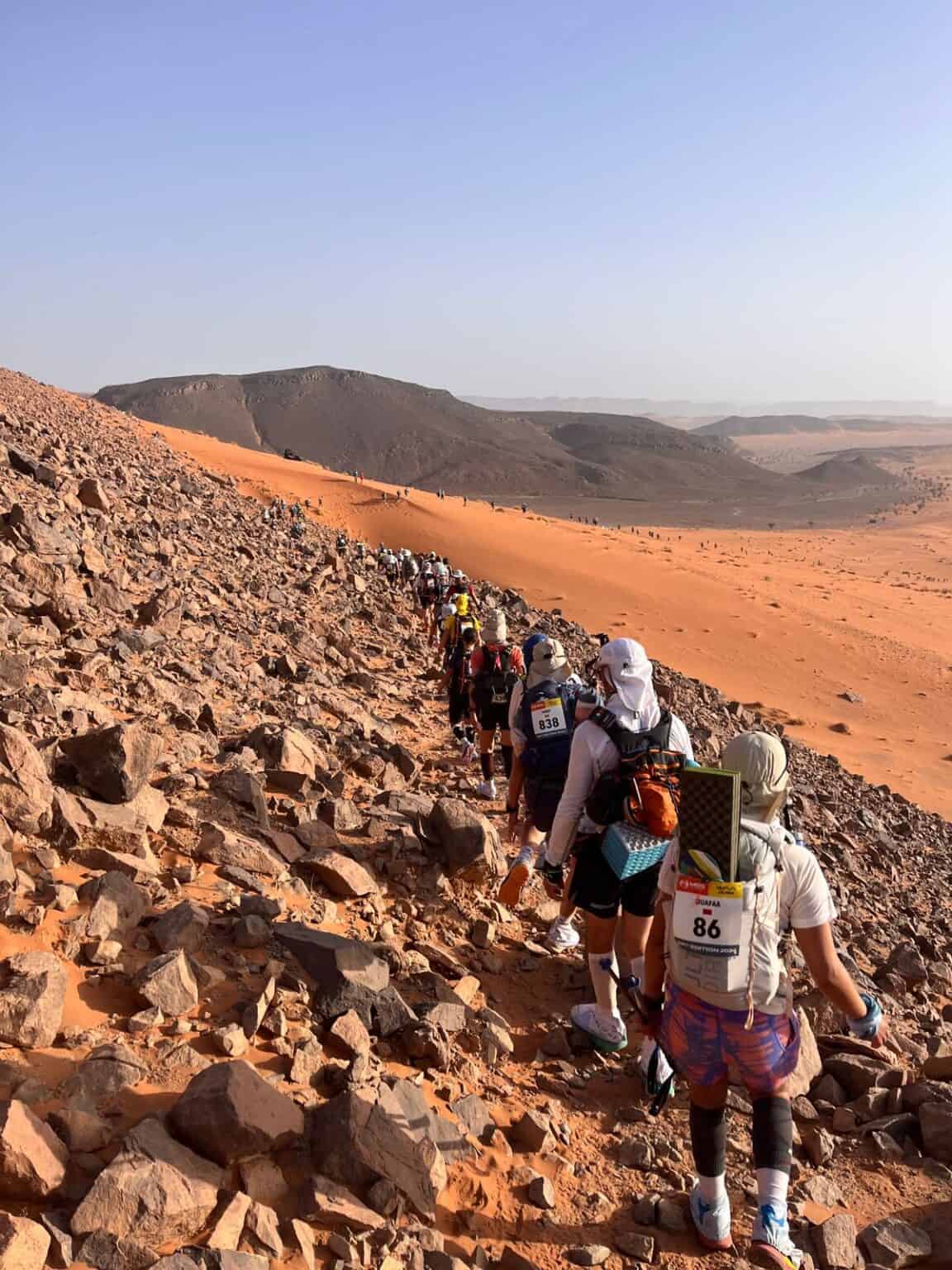
The long stage was also home to the famed El Oftal jebel, an absolutely mammoth climb of about 2km in length and ~250m of pure ascent. One side is rocky, and the other side is pure sand. Fortunately, this year, we climbed the rocky side and ran down the sandy side. As I stood at the top of the biggest dune I have ever seen in my life (and I’ve been to Huacachina!) I was terrified as I waded down, until I saw a few people run past me. I eventually plucked up the courage and joined them in a somewhat graceful dance down the dune, for what was the true highlight of the whole week. When you finally reached the bottom, you’d been wading through soft sand for so long that your legs were like jelly, and it took me a while to get back into a running rhythm on the rocky ground again.
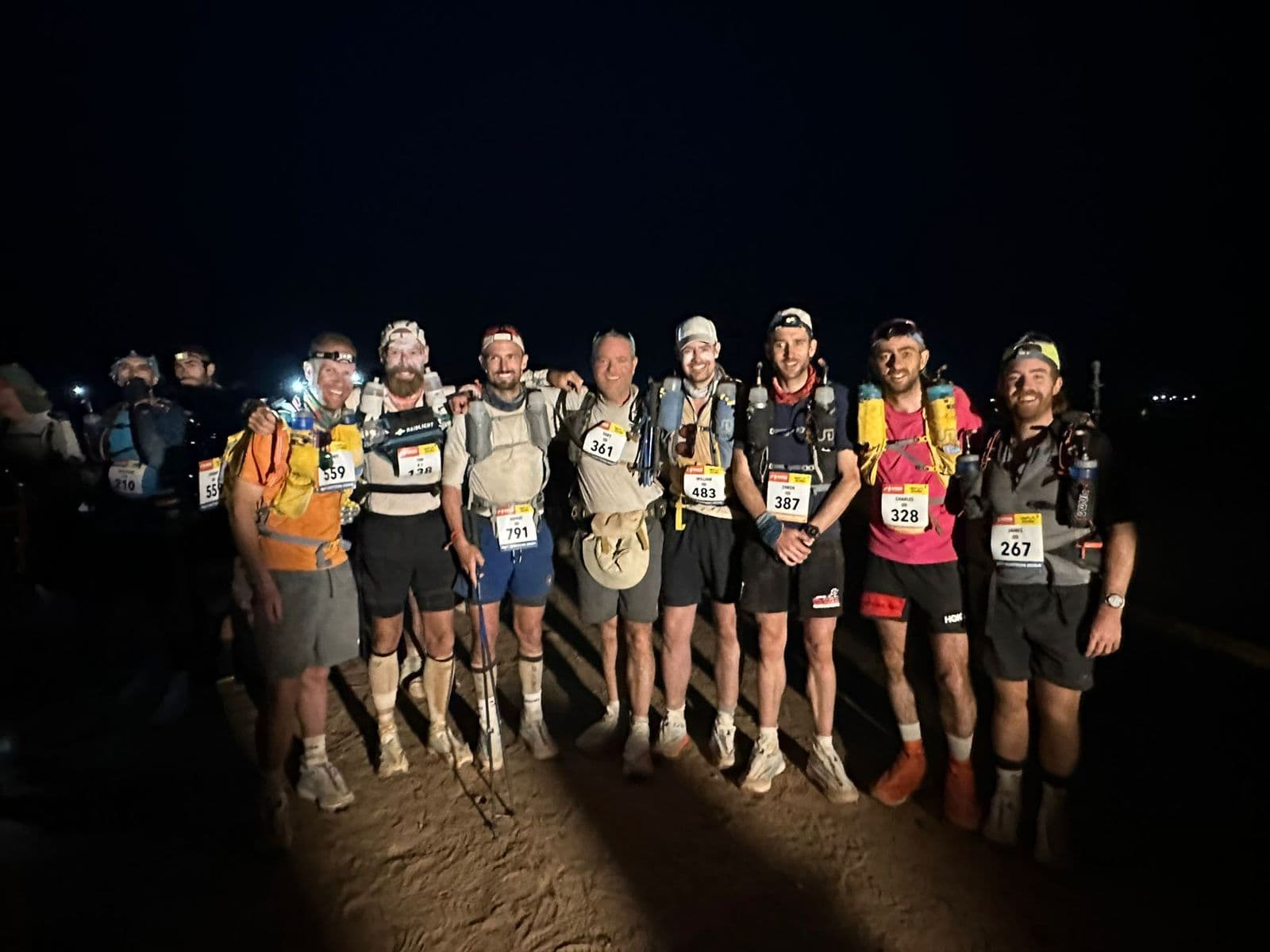
In relative terms, I managed the first 50km without any major hiccups. I took a few breaks of 30 minutes here and 60 minutes there, but the last 35km was absolutely murder. At KM55, the sun went down, so I was convinced I’d be able to jog the final 30km in the cool of the evening, but I was completely empty, and no strength was left in my legs. The final ~30km took me TEN HOURS. This was where my glorious ankle introduced a new problem, as my left ankle can’t rock from side-to-side, every time I hit rough terrain, my shoe would twist but my foot stayed upright, so my foot just swims around in my shoe all day long and as a result I was blessed with a string of blisters on both sides of my foot from the persistent friction. I sat on the side of a rock on a dried lakebed in the middle of the night, with my headtorch on and started hacking away at them with my penknife, all the while, countless bugs were being attracted to my headtorch and making themselves at home in my hair, where they stayed for the next few days I might add, it was horrible. I dealt with the worst of it, and the pain was slightly better; I just needed to get through these last 25km and go to bed. Then, problem two started. Managing your sodium levels is a huge, huge part of the MDS and something you have to very carefully stay on top of as you sweat relentlessly under the Saharan sun. I’d got this very wrong on this day, and at about KM60, I said to myself, “Hey, it’s a half marathon to go, let’s gun it”. I turned the screw for about 5km and then the hyponatremia kicked in. I was so low in sodium that it was like being 10 Aperol Spritzes deep, which in most cases would be a delight, but I was all over the shop. The proceeding 10km took me over 2 hours as I staggered through the desert. I finally made it to the final checkpoint at KM75, sat myself down and ingested enough salt to keep a chippy going for a year. After pulling myself together, I managed to get the final 10km finished in about 1h40, and all things considered, that’s pretty respectable. My finishing time of 23h43m, however, was not so much.
I waddled back to my tent at around 5am, and my tentmates, who had all been back for a few hours, woke up, took all my sleeping kit off me and made my bed. Whilst it may sound like a small gesture, my body had shut down, and I probably would have slept in full kit on the floor if it wasn’t for this. Thank you, tent 91 ❤
After a few hours of sleep, it was over 30 degrees again, so I wasn’t getting much sleep, however, the rumours were true – you were given a free can of Coke. OH, MY, GOD. After drinking 15-20 litres of lukewarm water every day, this was absolutely astronomical. I hobbled over to the medical tent to get those blisters looked at, I’d done such an abysmal job on the previous stage they’d got infected; thankfully, the medic dealt with them for me. The process involves piercing an “entry” and “exit” hole across the blister to drain out the fluid, followed by flushing them out with iodine from a syringe. The pain is utterly hideous, and I squealed like a drove of pigs being sent to slaughter, followed by repeated moans of “please stop” in front of 100+ people, all with considerably worse injuries than me. That, dear reader, was the day I became a poor, defenceless infant, and my tentmates will never, ever let me live it down 😅
Day 7 – Stage 4 – 43.1km and 390m of elevation
After a day of rest, and with the worst of the race behind me, the fear started to subside, and I felt like a new man heading out the next morning at 6:30am. The first few kilometres were admittedly quite nasty as most of my lower left leg and ankle were about as flexible as a block of concrete, but as the shuffle continued and the muscles warmed up, the flexibility returned. I put in a pretty good effort at the beginning and kept a consistent pace below an 8-min/km for the first 25km. I was dead-chuffed. It was at about this point that the heat kicked in; I’m confident it was the hottest we’d seen all week. Coupled with a nasty final 10k with really difficult terrain, that pace very quickly went to an average of about 13-min/km, the latter of half of which was so hot I had to take a break at the final water stop with 5km to go, as I thought I wasn’t going to make it! My most memorable moment from that final water stop was a guy sat next to me, white as a bedsheet, chucking his guts up. You’d think a medic would rush over, right? Nope, it was the cameraman: “Tell us what the heat is like out there?”. DUDE, COME ON. 😂🤯
I finally crossed the line, and I thought to myself, OK, now it’s over, 50km to go, over two stages, this will be a doddle. A bit more blister care was in order back at camp, and I was ready to go for stage 5.
Day 8 – Stage 5 – 31.4km and 252m of elevation

Ready to go and out the door at 7am. I just had to get through this 30km, and tomorrow was a half marathon, baby numbers in comparison to the rest of the week. I was feeling really pumped for this stage; the fear had gone, and I had so much Voltoral gel on me that I could’ve survived a one-on-one with a bison. As a result, I put in the best performance of the week so far, finishing with an average of 8:22-min/km. This was the most emotional stage for me; the worst was out of the way, and I was feeling so strong all the way through this stage. The home stretch was tomorrow, and I could almost taste the medal.
Day 9 – Stage 6 – 21.1km and 160m of elevation
I felt like this stage wasn’t necessary at this point, if it was up to me, I would have put a few K on the other 5 stages and finished the day before, but it was also quite exciting to finish on a short distance, knowing I could go flat out without having to worry about exhaustion or anything really going wrong. This was a really flat course with very little soft sand, and this was a breeze, finishing in 2h30 (6:51min/km), all the while keeping my HR at about 150bpm. It was humbling, though. This was pretty close to max effort, and it still took me 45-60 minutes longer than what I’m capable of doing a half marathon in, and I still didn’t manage to break into the top 300 either 🤯
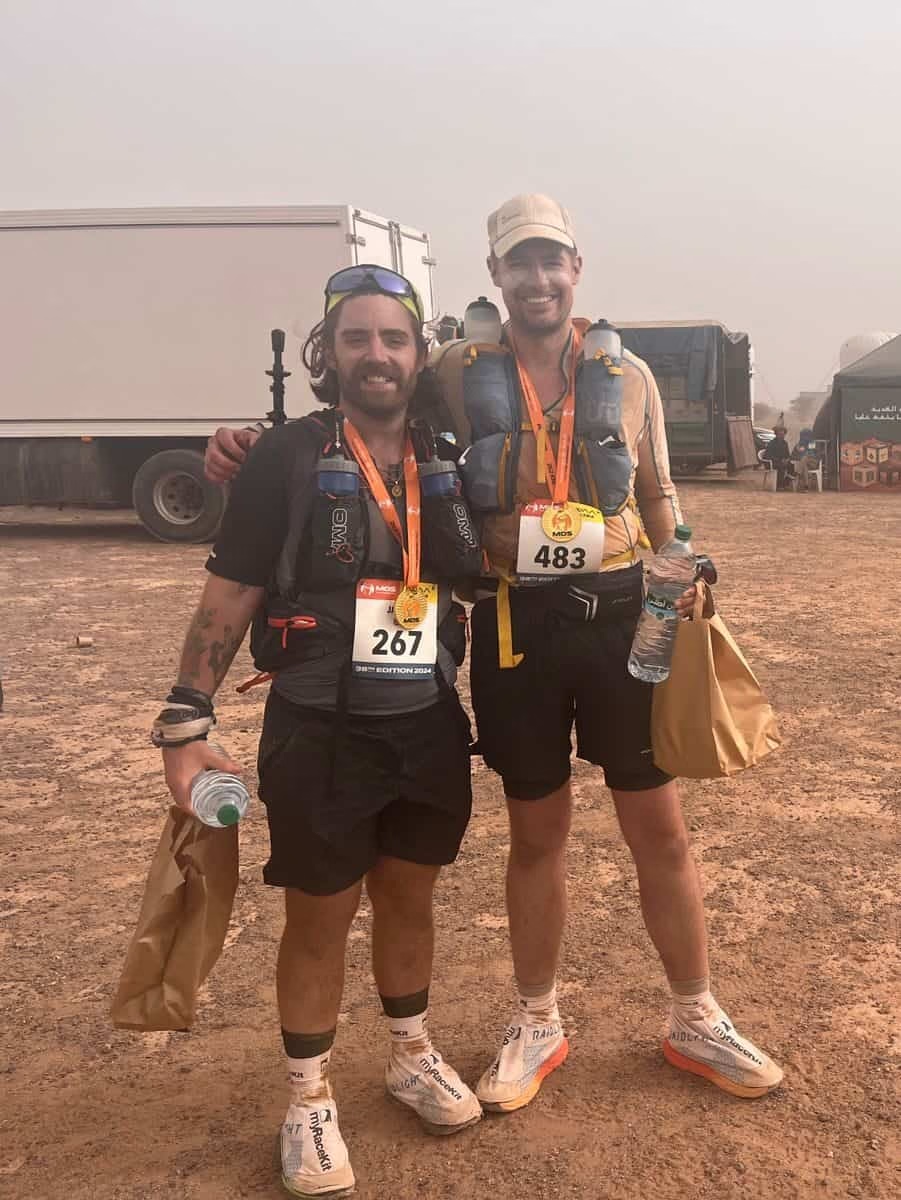
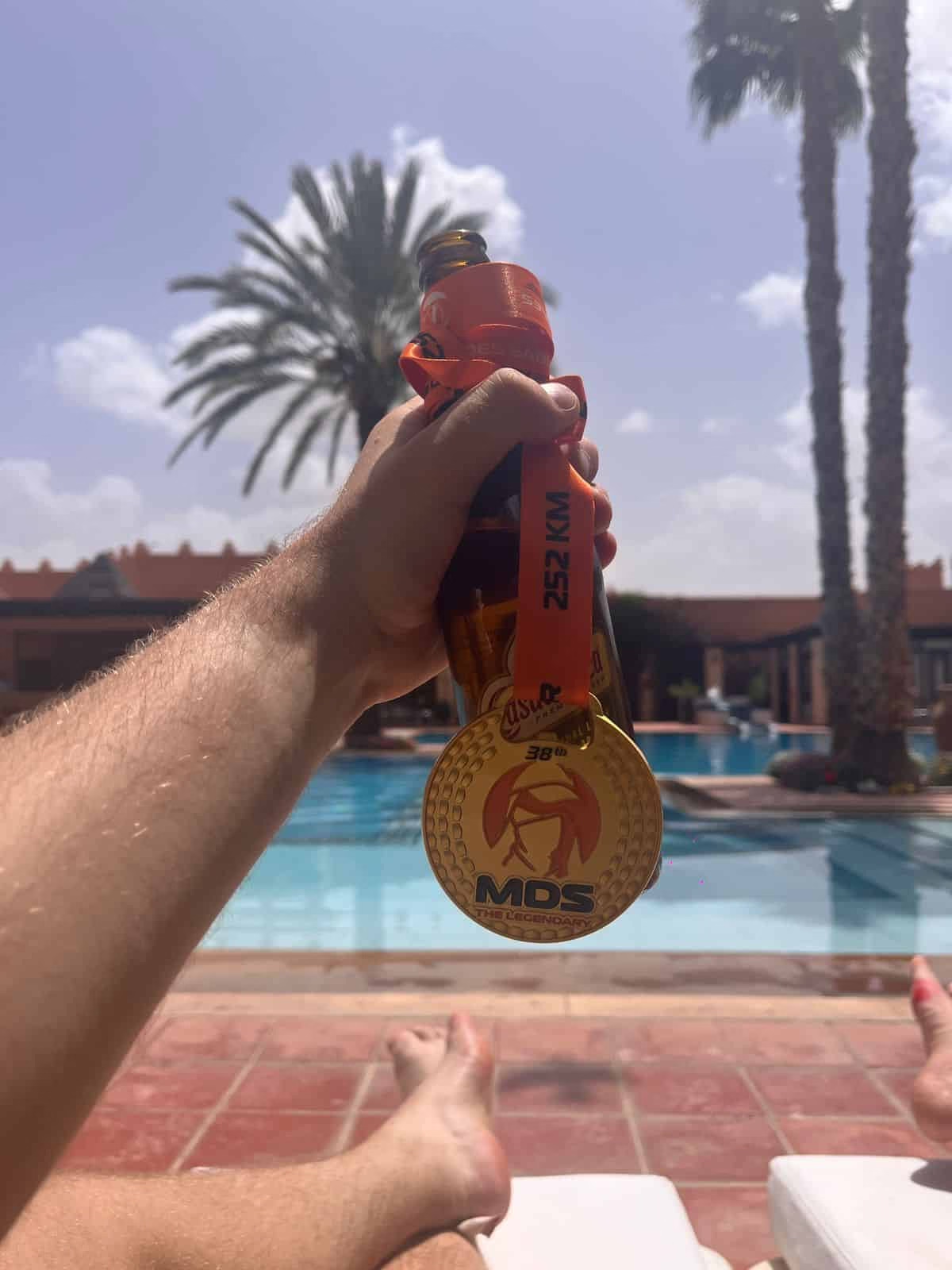
When all was said and done, the MDS took me about 50 hours to finish, almost 15 hours behind my personal goal, finishing roughly in the middle of the pack at 458th out of ~850. I crossed the line, burst into tears and clutched my medal; it was DONE.

Transfer back to Ouarzazate
As you cross the line, you get your medal, have your photo taken and are given your lunch bag for the bus ride back to OZZ. No way in hell was I sitting on a bus with 60 other people who hadn’t showered for a week, all of whom I’m sure would’ve taken their shoes and socks off, no sir. €200 for a taxi? Take my money. Split with somebody from my tent and two others, we headed back to Le Berbere Palace hotel in OZZ. About an hour into the drive, we stopped at a petrol station, and we witnessed civilisation: Coke Zero, a bag of Doritos and a Magnum, praise the lord.
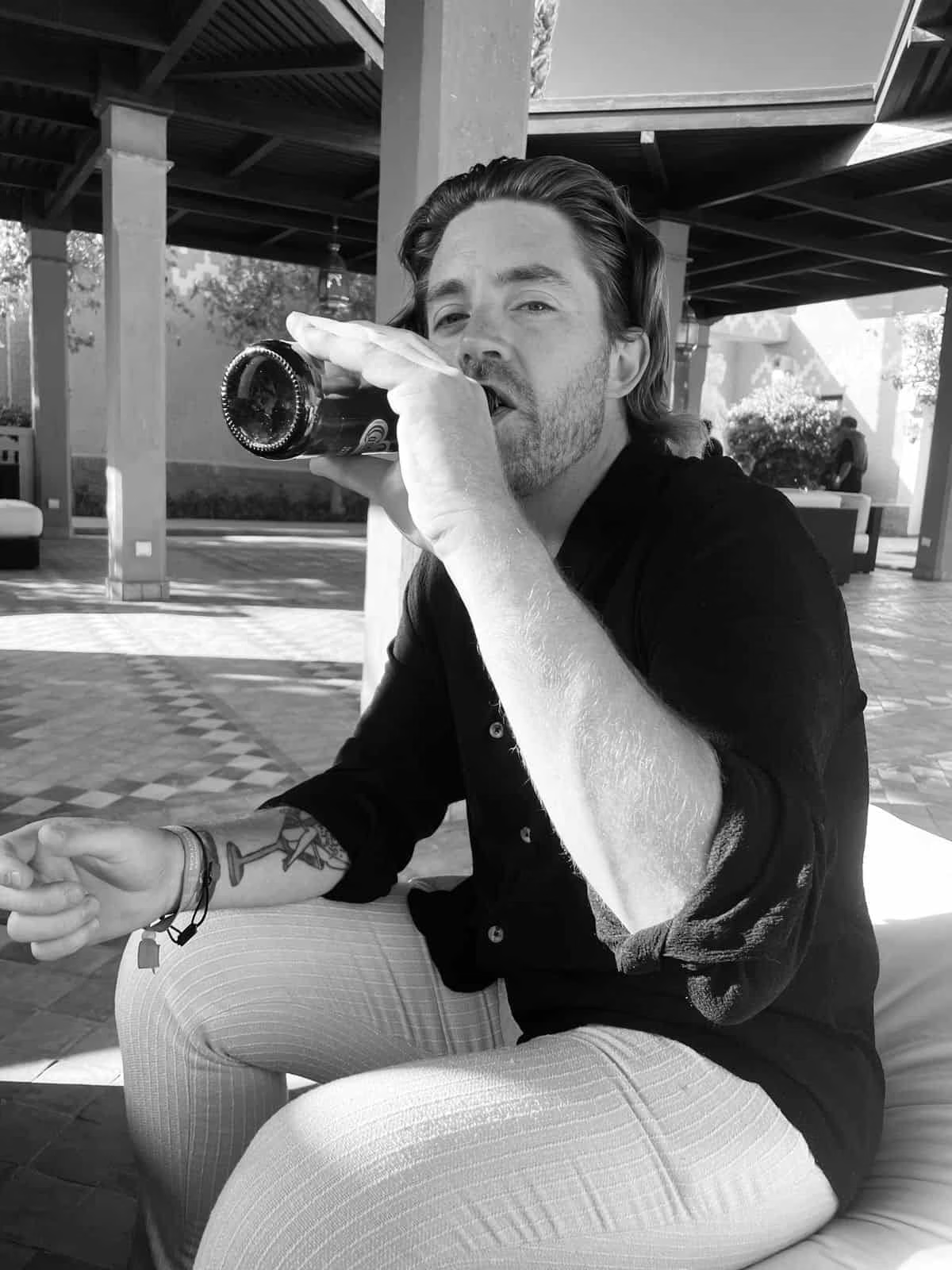
About 2.5 hours later, we arrived at the hotel, and naturally, we went straight to the bar for a 330ml bottle of beer that set us back €8, smashing. After the ceremonial post-race beer, I went for a shower. I had to wash my hair four times to get all the sand and bugs out! The rest of tent 91 reconvened later that night at the hotel for wine, beers and dinner, and I was first to bed at about 8pm, absolutely shattered.
Final Day
The final day was a free day of mooching around and visiting the MDS merchandise shop. In true French fashion, it was terribly organised, and we were queuing for hours just to get our free finisher’s shirt. Whilst the merchandise looked pretty cool, I wasn’t spending €90 on a hoody, nor was I queuing for another hour for it. The city of OZZ isn’t really that exciting, if I’m honest. It’s a small city of about 50,000 people and serves as the gateway to the Sahara, so it’s chock-full of tourists and hotels with very limited things to see and do.
Later that night was the gala evening. I was pumped for this – let’s get 10 beers in and make a fool of myself 💪 but it was a bit anti-climatic, unfortunately. Awards were handed out to the top performers, and then came the screening of the MDS movie, which, as good as it was, was obstructed by all the massive palm trees in the courtyard, so after 20 minutes, it became quite tedious. We stuck around, drank some beers, shared some memories and called it a night at about 9pm; it was an early start the next day after all.
Heading home

The next morning, we all piled into OZZ airport for the flight home, and for those of you that have ever travelled to Morocco, you’ll know how terrible their immigration control is. Cramming a few hundred people into a very small Moroccan airport is just a recipe for disaster. They scan your bags as you enter the airport, and then they scan them again 10 metres later as you go through security, you know, just in case you picked up some weapons-grade plutonium in the last few metres since your last scan. But, two hours later, we were finally through to departures and shortly afterwards on our way home to Gatwick 🙏 It was over; it was done.
I know what you’re all thinking: Would I do it again? Hmmm, probably not. The event itself is an amazing experience like no other; it’s just the year of training beforehand that really kills you and at £4K+ just to enter, there are just as many iconic races across the globe that cost a lot less. Do it once to say you’ve done it, absolutely, but I don’t think I’d do it twice, unless I convinced somebody to sponsor me again 😂
A parting thought, dear reader: As I made my way through the first few stages, I really started to beat myself up. I was hours behind target and hours behind what I knew I would’ve been capable of if circumstances were different. It really chewed away at my enthusiasm and my self-worth to a point where I didn’t enjoy the first half anywhere near as much as I could have. Eventually, I realised, I am performing at the very best that my mind and body is capable of, right now, and I’m getting up every single day and doing that, and as I cross the line, I join the 0.0001% of the world’s population that has done what I’ve just done. So yeah, I didn’t meet the expectations that I’d set for myself, but I completed the toughest footrace on earth, to the best of my personal ability, and there’s no greater feeling.


