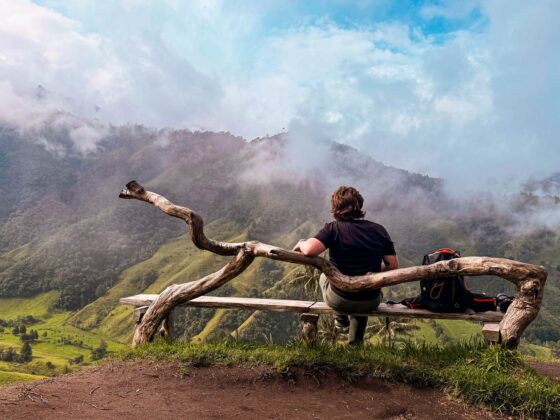
January 1st, 2024: the moment it clicked
January 1st, 2024. I’m halfway through a month-long trip through Colombia and Peru and I’m sitting in the co-working space of my hostel in Lima, Peru with a mild hangover, a half-decent coffee and absolutely nothing to do.
As it’s a typical public holiday, everything is closed and as is my luck I was up at the crack of dawn. I’d normally treat myself to a morning run but those Aperols the night before had something to say about that. I cracked open my laptop and decided to catch up on some work. My job at the time was super-intense, a lot of hand-holding, a lot of staff turnover and as such, my inbox never stopped. But it was different this time, I was the only person working. I’ve opened my laptop abroad plenty of times to answer the odd email or deal with a minor task but I managed to get through my entire backlog of work in a morning. Completely focused and uninterrupted. It wasn’t something I ever realised I missed until it happened; no one needed anything, no pointless meetings, no “quick questions”, nothing. I remember thinking on that day, this is actually a really nice way to work.
That’s still a rule I live by now: if there’s a bank holiday, I often work it. Then I take a different day off instead. It may sound miserable or boring but it’s super useful and you can do a week’s worth of admin in a day because nobody else is pestering you every five minutes.
And just like that, sat in that empty little co-working space in Lima, my brain clicked… This is the life that I want.
Admittedly I’m a very impulsive person, so it could’ve just been a fleeting moment, but this really stuck in my head. I knew how unhappy I was in my hometown, I had been for many years. And I knew how much happiness travelling around brought me. It wasn’t anything to do with not working, I love working, I just needed constant mental stimulation and I needed to not be in an office with all the drama that comes with it.
One of my favourite books, Bullsh*t Jobs by David Graeber, refers to the office as modern-day psychological warfare, and I couldn’t agree more.
At the time it felt insurmountable and I wasn’t sure exactly how it would work out, maybe I would spend my summers in my hometown and winters abroad or maybe I’d go away for a year or two at a time, but I needed to figure this out if I was going to make this work.
So I broke it down into three chunks, three projects, three barriers, that were in-between me and my dream remote life.
My mortgage. My job. My dog.
The mortgage seemed solvable, likewise the job didn’t seem completely impossible… but my dog, my child of five years, what was I going to do there? That seemed like the most difficult task of all, so I started there.
Part 1: the dog, the “impossible” problem that wasn’t
 So I’ll start honestly, travelling with a dog is doable and not as difficult as it may seem, providing you put in the planning. A lot of people will try to put you off and whilst some of it is well-meaning, but in reality, the majority is the classic feelings of people thinking something is difficult therefore they’ll try and convince you it’s impossible. No time for that kind of energy.
But the truth of the matter is, it’s completely doable and as the years go by, it’s only getting easier as more and more airlines relax their rules for dogs. Pet travel is a fast-growing industry!
The first question you have to answer is: can your dog fly in the cabin or do they have to go as cargo? If your dog can travel in the cabin, your life gets dramatically easier. The general rule is; if your dog including the carrier is under 8kg (some airlines, like Avianca, allow 10kg) they can fly with you in the cabin. Airlines are strict on the carrier size, so double check the measurements, but nobody has ever weighed Bella. Above this weight, and you’ll probably have to fly cargo, note that dogs like pugs are brachycephalic and they cannot go in cargo, so if your pug is over 8kg (which is likely), you’re going to be really stuck. You’ll instead need to get your dog registered as an emotional support animal and travel that way.
A very large proportion of airlines now allow in-cabin pets, especially the major flag carriers. The real headache tends to be the UK, because you can’t fly a pet into the UK in the cabin, but you can fly out of the UK.
At the time, I wanted to start in Lima. When I researched routes from London to Lima, I found I could fly with Air France and Air France allowed in-cabin dogs up to 8 kg including the carrier. So that was problem number one solved.
Cost-wise, it varies by route, airline and season, whilst I did switch to Ecuador in the end I remember it being around £150 for the pet fee to Lima (same price to Quito). When you’ve been imagining some terrifying four-figure nightmare, seeing a figure like that feels like a bonus, although if you travel cargo, it can indeed cost that much.
The part that is difficult is the export process and this is where a lot of people get overwhelmed and give up, paperwork is tricky and there’s a lot of false information online, even some vets get tricked up by this. The solution is: you need to find a vet in your origin country that specialises in exports. I used Heathrow Vet Services which is run by a lovely chap called Bruno. Him and his team are fantastic; calm, organised and most importantly, they’d done this a thousand times before.
They will prepare an export certificate for the country that you are going to, in my case this was Spain (I was spending a couple of months in Spain before heading to Ecuador), and then you just show your papers on the other end. From memory, the cost was about £300 and it is mandatory for travel. Remember that you also need to check airline rules carefully, carrier dimensions, check-in timings and documentation.
The booking process is a pain in the backside as well, every airline is different, but I always book my flight over the phone. Most airlines will tell you to book your flight online and then call to add your dog onto the flight, that’s too much risk for me. I call the airline and say I want to book a flight and travel with a pet in the cabin, it’s a painstakingly long process, you’ll be on the phone at least 30 minutes, but it guarantees you get it done the right way.
Planning one step ahead
With pets, you always need to think about two sets of rules: the country you’re leaving and the country you’re entering, because there will be a set of rules for each side and it becomes infinitely more difficult if you add a country with a rabies risk into the mix (like I’ve done with Ecuador). Ideally, have a vet on both ends who actually understands import and export rules and you should be set.
Rabies and future-proofing
Most, if not all, countries require a rabies jab. But it gets tricky when you enter a country with a rabies risk like many in South America and try to enter, say, Europe again. As such, it’s highly recommended that you get a rabies titre test, this is proof that your rabies vaccine worked and provided you keep your rabies jab up-to-date annually, you’ll be sweet. Cost is about £200-300 if done in the EU, considerably more if outside.
So yeah, it’s pretty pricey, I probably spent about £1,000 on everything, but I had her rabies jab, titre test, vaccinations, a European pet passport, export paperwork and everything I needed. Follow-up times you only have to keep all your jabs up-to-date, and have your export paperwork and airline fee, so it’s probably more like £400 a time. With the dog sorted, I felt a lot more relaxed and moved onto step two…
Part 2: the mortgage, and why I burned the boats
I needed to decide what I was going to do with my apartment; rent it out, extend the mortgage or sell.
Originally I was going to rent the apartment out and I would’ve been left with about £500 a month to my name, not something to be sniffed at! But, then the mortgage rates went up and renting it out left me with about £200 a month after tax and interest. And whilst £200 a month is helpful to anybody, just one little mishap at the apartment would wipe out a year of profit.
However I only had a few years left on my mortgage, so there was the option of extending the mortgage back up to 30+ years again and it would give me more breathing room, maybe £500 a month, but at the cost of adding decades onto the term. When I did the math, I’d basically be paying for the property 4x over with interest rates the way they were.
As time went on, I realised it just made no sense to keep the property. I could sell it, put the money into a savings account and get about the same amount in bank interest, without needing to deal with a tenant.
So I sold it. I burned the boats.
Now I had a solid emergency fund, no tenants and no responsibilities hanging over my head from another country. For me, it was absolutely the right decision, but I had nowhere to live… which was terrifying at first, but over time I got used to it.
Then came the hardest part.
Part 3: work, and the long uncomfortable middle
My first plan was to convince my employer to let me work remotely so I spent two to three months tracking every major task I did, categorising whether they could be done remotely (green), done remotely with some changes (amber) or if they couldn’t be done (red). About 80% could be done remotely with no change, around 10% with some accommodation and less than 10% required physical presence. That was actually a lot better than I expected.
So I put together a presentation, grabbed my boss and dropped the bombshell: I was leaving my home-town. I’d either work for them remotely or I’d be quitting and going freelance. I gave myself a nine-month timeline, three months for them to mull it over and decide followed by my six-month notice period if they didn’t agree to it.
I had my first meeting with my boss and it went OK, I waited a week or two for him to mull it over and I was given an initial green-light, for the next few months, I had various meetings and presentations with other senior staff, a trial remote work period and it all went swimmingly. Long story short they then, at the last minute, changed their mind. Read more about that here.
So I went freelance.
The anxiety phase
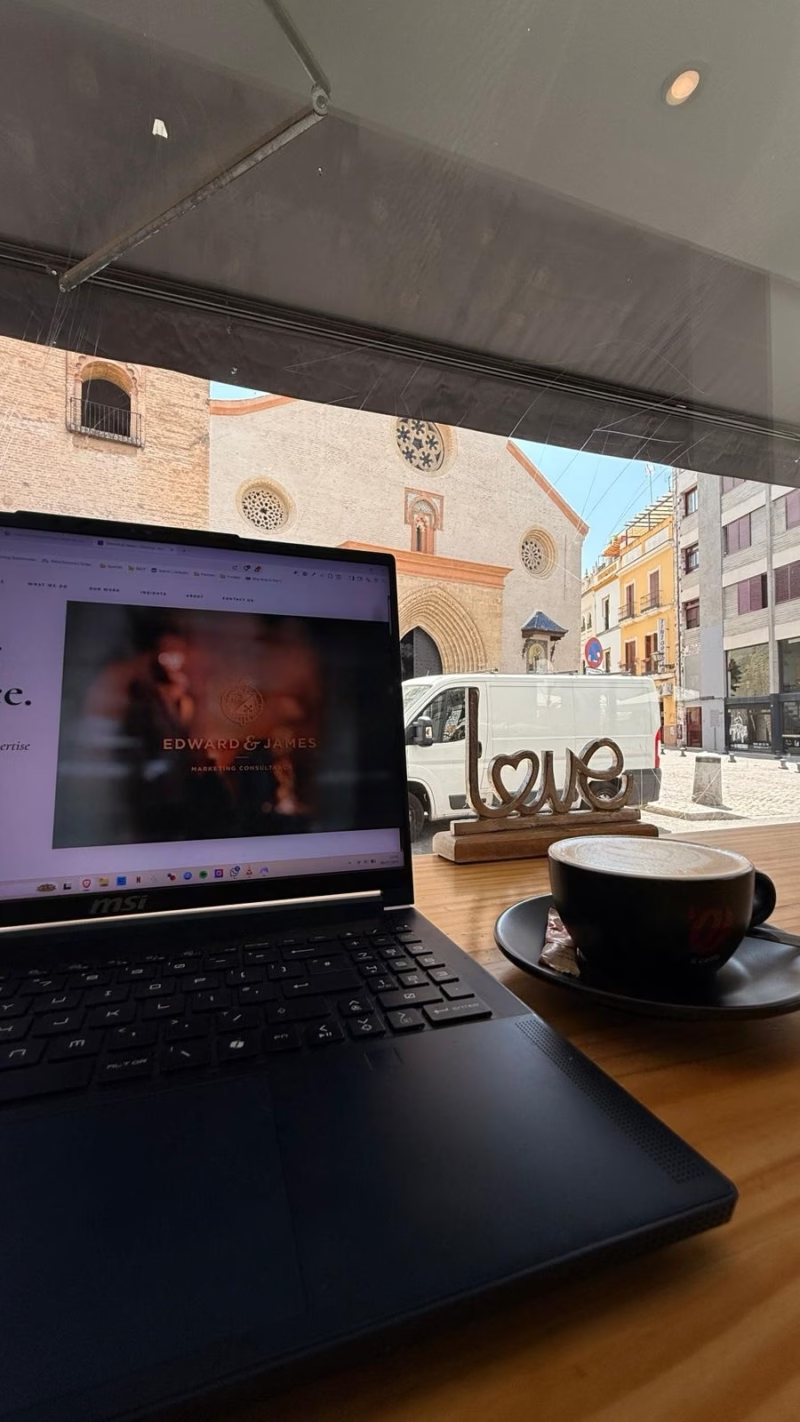 This is the part that people don’t talk about enough and honestly, for the first six months, it was just anxiety. Constant anxiety. Whilst my goalposts kept moving.
At first the goal was just money, anything, just anything to stop me burning through my reserves. I managed to secure a little bit but then I needed another project or another retainer to break even, but I was still touching my savings, so now I needed another retainer to turn a profit and leave a buffer. That took a year!
Even now, more than a year on, with multiple retainers and projects, the thought still creeps in: I could probably still do with one more just to feel a bit more comfortable, I fear that feeling will never go, I think that’s the curse of running your own business. You are permanently aware of risk, you just carry more responsibility and need more margin.
Before all that, I applied for around 30 remote jobs. I didn’t get a single interview. Coming from a place where getting work is relatively easy, that was genuinely soul-destroying. But it made me realise, if I wanted to secure this kind of life I was going to have to work my ass off to get it, nobody was going to hand it to me, so I kept going, and I kept working harder.
I did some free work to build a portfolio, so I had something to show off and with that I landed a small one-off project, which turned into my first retainer client a few months later, and more small projects continued to follow.
By month seven or eight, I had my first five-figure month. By month eleven or twelve, I made my first hire and surpassed my old salary, which was pretty hefty in itself. And it all happened within the first year. Which is fantastic to look back on now, from the position I’m in, but I need to be abundantly clear that I didn’t make a penny for the first four months and I had countless sleepless nights for the first six months, utterly convinced I’d completely ruined my life.
The arrival moment: when it finally became real
I never actually went to Peru in the end. Peru never launched its nomad visa and I pivoted to Ecuador instead.
By this point, I’d spent nearly a year just being nervous. Juggling money. Building a business. Selling a property. Doing everything alone. It genuinely took a toll and at one point, I think it made me ill.
By the time the flight came around, I was paranoid about everything.
Would the visa work at the border?
Would there be an issue with the paperwork?
Would the dog be allowed in?
Would the flight be a nightmare?
 Bella’s first flight was from London to Madrid and when we got to Heathrow airport, I met the loveliest lady from Iberia who rushed over when she saw Bella… “please come and do check-in with me, she’s adorable!”. I was so nervous about my first flight, was the paperwork wrong, was she too heavy, was the crate too big and thanks to the lovely lady at Iberia, the first dog check-in was an absolute breeze.
We boarded the plane, and it was a little tricky, as we got on the flight, Bella sneezed in somebody’s face 💀 and the plane sat on the tarmac for an extended period of time, it was pretty toasty. But, we finally made it to Madrid, and then hopped on a train to Seville. I will admit though, it was a loooong stressful day and I wouldn’t rush to do it again. Travelling with a dog isn’t impossible but god damn it’s exhausting.
After a couple of months spent in Seville we then started the second leg of our journey to Quito, Ecuador. I used the time in Seville to get Bella a European pet passport, to make flying a bit easier in the future and I’d highly recommend it.
We had an 11-hour flight from Madrid to Quito and an interesting thing about Iberia, is you can fly in business class with your dog, and the pet fee is the same. Well worth it for the length of the flight and for the added comfort. I was super nervous about the flight, what if Bella had issues, what if she became restless or couldn’t control her bladder. Absolutely nothing, not a peep for the entire flight, I even received a comment from somebody who said she didn’t even realise there was a dog on-board for the whole flight.
As we landed in Quito, I was the first person off the plane and first in line at immigration. I showed my shiny digital nomad visa and was through in five minutes, I couldn’t believe how easy it was!
At customs, I showed the dog paperwork. What had cost me hundreds and hundreds of pounds, they glanced at the first page and couldn’t be bothered and ushered me through… what were the chances!?
My luck continued and my bags were first off the plane too. From plane to front door in about 20 minutes, it was insane. I ended up waiting half an hour for my taxi because I got through so fast.
 I purposefully booked an overnight in Quito because there was a 4-hour gap between landing in Quito and the next flight to Cuenca, I just didn’t think there would be enough time, but how wrong I was! Nevertheless, we got some kip at our Airbnb and were up early the next day to explore Quito. We headed into the city and took a walk around the massive Parque La Carolina and then took the TelefériQo up to Pichincha Volcano where Bella saw her first alpaca, which was highly amusing.
We also headed to the middle of the world (pictured), crossed the equator and had a photo at zero latitude, a very cool experience. From there, we took a taxi back to Quito airport and we took a short 45-minute flight to Cuenca, completely stress-free.
She settled into the apartment immediately. And that was the moment. Sitting in that apartment in Cuenca, I finally thought:
I’ve done it. I’ve actually done it.
I had my visa, I had my business, I’d made it across the Atlantic and through customs with my dog with no problems. This was really it, this was day one of my new life.
The truth is that Cuenca didn’t feel like home straight away, that took time. But now, just over six months in, it genuinely does, I have my routine, I’m making friends, I’m settled and I love it. Honestly, I even miss Cuenca when I travel to other cities around Ecuador, I’ve never missed a home before. That’s how I know it’s real.
The quiet multipliers
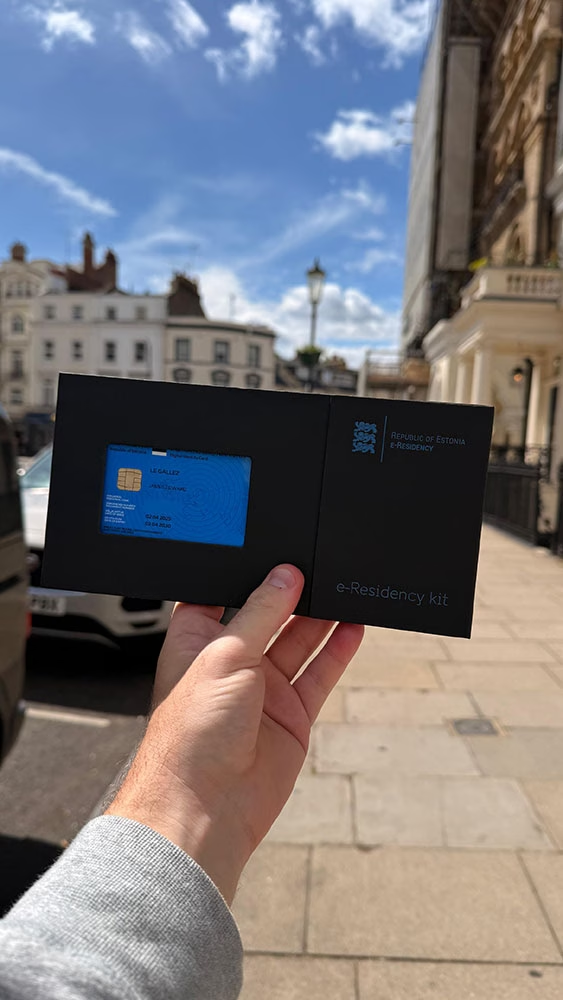 But there are other things that have made this life sustainable that a lot of people overlook: I set up a proper remote company so I could run a business and pay myself legally, read about that here. And I also learned Spanish, I’ve been at it now for almost 18-months, with the last six months being more intense, I’d say I’m a level B2 at the time of writing, and I should reach C1 by the end of 2026 (C2 is the highest with near native fluency). Whilst you can get away with not learning Spanish, I think it’s where so many people go wrong, you just end up becoming a stranger in your own home, I don’t want to socialise with other nomads that’ll be gone the following week, I want to make lasting friendships with locals.
And those extra steps are what took me from from nowhere to nomad, none of it was one giant leap, none of it happened overnight, it was a concentrated effort that I spent an hour on every single day, without fail, for a year and now I’ve built the life I’ve always dreamed of.
So if you find yourself in a similar position, break it up into manageable chunks, don’t think about the end, work on it step-by-step and chip away at it every single day, you’ll be amazed at where you are in a year.
That’s how it starts. Good luck!