Last updated: May 2025
Want to know what it’s like being a digital nomad in Oaxaca, the global capital and home of mezcal?
I’ve stayed in Oaxaca City on a number of occasions as a digital nomad (you can read the shorter recap in my Trip Report, here) and I’ve used my personal experience to create this comprehensive guide.
Introduction to Oaxaca for Digital Nomads
As well as a charming example of colonial architecture, there are a variety of other towns within the state of Oaxaca that will satisfy every digital nomad’s needs, from the beach town of Puerto Escondido, the mountain retreat of San José del Pacífico, the cultural Zapotec town of Mitla, to the laid-back yoga retreat of Mazunte, Oaxaca has it all.
Table of Contents
- Introduction to Oaxaca for Digital Nomads
- Living in Oaxaca as a Digital Nomad
- Working in Oaxaca
- Getting Around Oaxaca
- Oaxaca’s Digital Nomad Lifestyle
- Keeping Fit in Oaxaca
- Things to Do in Oaxaca
- Destinations for Digital Nomads Beyond Oaxaca City
- Is there a Digital Nomad visa for México?
- How To Be A Responsible Digital Nomad in Oaxaca
- FAQs for Digital Nomads in Oaxaca
- Conclusion
Living in Oaxaca as a Digital Nomad
Best Neighbourhoods in Oaxaca City
Within Oaxaca City, the main barrios that you need to know are: Centro, Reforma, Jalatlaco and Xochimilco, there are of course others and Oaxaca City is part of the wider state of Oaxaca with lots to explore, which I cover later in this article.
Centro
Choose Centro if: You want to be in a vibrant area full of bars, restaurants and other nomads.
Don’t choose Centro if: You want somewhere more authentic with less tourists.
Centro is the main hub of Oaxaca City where you’ll find the bulk of the action, tourist attractions and co-working spaces. If you’re venturing here for the first time, I would start in Centro as it’s much easier to navigate for a first-timer and you can take the opportunity to discover some of the other neighbourhoods as you get used to the city. Centro is a typical colonial town home to an array of bars, restaurants, Airbnbs, co-working spaces and typical tourist attractions.
Centro is reputedly very safe but I was advised to take taxis late at night, I walked the street at night a couple of times and it didn’t seem too hairy, but I’d always advise to err on the side of caution in a new city.
Jalatlaco
Choose Jalatlaco if: You love old-world charm and street-art.
Don’t choose Jalatlaco if: If you prefer to be closer to nightlife and all the action.
Less than ten-mintes walk east/north-east from Centro, you’ll find the brightly coloured barrio of Jalatlaco. This beautiful, arty district of Oaxaca City is my personal favourite and is home to beautiful cosy cafés, cobbled streets and heaps of street art. I spent most of my time here for work as there’s a great little co-working space called Centrico Jalatlaco, which charges £7 for a day-pass with free coffee – they offer concessions for longer commitments, too. If you want somewhere that still carries the typical charm of central but a little more laid-back, then Jalatlaco is the place to be a digital nomad in Oaxaca.
Xochimilco
Choose Xochimilco if: You want somewhere tranquil and love street-art.
Don’t choose Xochimilco if: You need options for working nearby.
Third on the list is Xochimilco, which is a 5-10 minute walk north from Centro and its focal point is Calle José López Alavez, which runs through the middle of the barrio and features an endless amount of street art. Xochimilco is one of the smaller barrios on offer and, in my humble opinion, is better suited for a short trip and not really that well-equipped to be a base of operations for a digital nomad. There are a few good options for cafés in the area, and as Oaxaca hasn’t been completely overrun with nomads yet, if you ask nicely, many cafés are quite happy to entertain café-surfers. If you did decide to base yourself in Xochimilco as a digital nomad, then I would make sure you get yourself a well-equipped Airbnb with a decent desk and chair, but, be warned, this is the only Airbnb I’ve managed to find in Xochimilco with a dedicated desk and proper office chair – so if you’re the kind to pull a long shift and value comfort, your options are going to be very limited.
Reforma
Choose REFORMA if: You are planning a long-term stay.
Don’t choose reforma if: You don’t speak any Spanish.
Last but by no means least, is the barrio of Reforma, a bit further north, about a 20-minute walk from Centro and where I spent a great deal of time living. Reforma is world’s apart from Oaxaca and more like a typical suburban neighbourhood, with none of the street art or cobbled roads of some of the aforementioned barrios. But, in my opinion, it’s the most liveable; rent is cheaper, there are no tourists, plenty of cafés and restaurants, cafés are very laptop friendly and there’s a massive bookshop that has a café and a free co-working space upstairs and I couldn’t recommend it highly enough, it has been one of my favourite spots to work from in all of México.
Reforma is home to a myriad of local restaurants and shops, plus a couple of malls, too. Overall, if you’re planning a long-term stay in Oaxaca, I believe that Reforma is your best bet, if you want to live a typical life without the nuisance of the touristic centre.
Renting Accommodation: Short-Term and Long-Term Options
Airbnb is your natural first-choice, especially if you’re on a typical tourist visa. If you manage to secure a Temporary Resident Visa (México’s answer to a digital nomad visa) then that will open up a lot more options that are a lot cheaper, too.
Short-Term Rentals
There are plenty of options on Airbnb, make sure to check reviews thoroughly and ask for a photo of a speed-test and details of their “dedicated workspace”, there’s nothing worse working from a dining room table and a picnic chair for a month. Don’t be afraid to contact the host directly and ask for a deal too. Lastly, I’d check the cancellation policy too, as I find that people are often too kind with Airbnb reviews and you end up stuck somewhere unfavourable for a month, or longer, with no way out.
If you’re staying for a while, definitely pick somewhere that will give you a partial refund if you choose to cancel part of the way through.
Beyond Airbnb you have, vrbo, home to go and Booking.com
What I also found were a lot of street signs offering places to rent with a WhatsApp number, just walking around some of the neighbourhoods for a day and you’ll have a veritable black book of options to choose from, all likely cheaper than the likes of Airbnb.
What I would say is that Airbnbs in Oaxaca are some of the most expensive you’ll see on your travels as a nomad and the bar is set very low. If you want an entire apartment, you’ll need to spend at least £1,500/mo and if you want to be central with a high standard of living, expect to pay over £2,000/mo.
Long-Term Rentals
LTRs will likely require a formal lease signed and as such, you’ll need a Temporary Resident Visa or something similar in order to be able to enter into these contracts. Whilst you can opt for LTRs on Airbnb and similar sites, they’re not cost-efficient in the long-term.
If you have a TRV, some good options are:
There are a lot of independent agents also, so using a search engine such as Inmuebles24 or Vivanuncios are a good idea.
Cost of Living Breakdown
Oaxaca is a much cheaper alternative to México City for digital nomads, and like all things, this will vary wildly depending on your spending habits and the things that you like. You can eat in a Michelin Star restaurant where a main course will set you back £20 (which is still incredibly cheap) or you can get a mouth-watering fully-loaded torta from the street for £2.50. But here are some typical costs to help you, I’ve left off accommodation because it’s a very expansive subject and you can look on Airbnb at any time.
Remember that currencies fluctuate and GBP and USD won’t always be correct
| Item | $MXN | £GBP | $USD |
|---|---|---|---|
| 1lt Milk | 25 | 1.00 | 1.25 |
| 1lt Water | 10 | 0.40 | 0.50 |
| Domestic Beer 330 | 25 | 1 | 1.20 |
| Pack of Cigarettes | 80 | 3.15 | 3.95 |
| 1mo Gym Membership | 400 | 15.80 | 19.80 |
| Prepaid Sim w/3gb | 150 | 5.90 | 7.40 |
| Torta street food | 60 | 2.40 | 3 |
| 3-course meal for 2 | 2000 | 80 | 100 |
Working in Oaxaca
Internet and Wi-Fi Speeds Across Oaxaca
Top Tip: Telcel is considered the best mobile network and works well in Oaxaca
Most places I encountered in Oaxaca had solid wi-fi and it’s not difficult to exceed 100mbps internet in places with a solid set-up, always ask for details ahead of booking accommodation: “Which service do you have (i.e. Telmex Infinitum)?”, “What is your internet speed?” and “can you send me a screenshot from Speedtest.net?” are a good combination of three questions to ask. I always travel with an ethernet cable as well, this is something so many nomads don’t do. Honestly, most internet issues are because the wi-fi hasn’t been set-up properly or the router is an old bag of shit that isn’t compatible with your laptop, it really pays to take an ethernet cable with you and get uninterrupted internet. Or, to be on the really safe side, invest in a Beryl from GL.iNet, it’s a pocket-sized travel router, simply plug it into the router of the accommodation and you’ll have your own secure and robust wi-fi network, problem solved. DO NOT leave home without one, trust me.
Further reading:

Best Coworking Spaces in Oaxaca City and Beyond
I cover this is in more detail in the above linked article, but if you’re really into community then I would recommend Co.404 which is in Centro, this is a co-living space and most reports I hear about Co.404 are very popular. I’ve stayed in their Medellín offering, which I wouldn’t recommend, the building is quite rundown (which I’ve reviewed here) but I’ve heard their Oaxaca base is far superior.
The aforementioned bookstore in Reforma is worth a look and, from my experience, Centrico is a fantastic co-working option that offers two spaces (Centro and Jalatlaco) with very reasonable pricing. I cover all of the best options for co-working in Oaxaca, on this post.
Getting Around Oaxaca
Transportation Options Within Oaxaca City
Whilst Uber and Didi Car claim to operate in Oaxaca, I never successfully scored a ride with either of them, and people that I spoke to said the same. For getting from A to B, flag down a taxi on the street, there’s no shortage of them and don’t be scared to barter, you should be able to easily knock off 30% without much protest, try for 50% if you’re feeling bullish. If you’re heading further afield, you can’t beat a Colectivo, which is Mexico’s answer to buses, kinda. They’ll have a predetermined end location, which will be displayed on their windshield, flag one down if you spot it on the street – it’s best to ask locals where to get them from. When you find the one that you want, ask the bus driver “¿vas a [Location]?” which roughly translates to “are you going to [Location]?”, once confirmed, ask how much it is “¿cuánto cuesta?” and you’ll be on your way. If you don’t value personal space too much, the Colectivos are the way to go for getting around the state of Oaxaca (and México in general).
Day Trips and Regional Transportation
Again, as mentioned above Colectivos are a great way to get around in México and I’d hedge a bet you could probably get from one end of the country to the other, solely by Colectivo, but I wouldn’t recommend it. For any of the major nearby towns and attractions that you want to visit, such as Arbol del Tule, Monte Alban and San Jose del Pacifico there will always be a Colectivo option, or if you prefer something more fancy, look-up transfers online via TripAdvisor, GetYourGuide or similar.
There are also taxis but I wouldn’t personally recommend them for longer distances, most of the taxis I encountered in Oaxaca were pretty rundown.
For even longer distances, you’ll want to try ADO, this is the market-leader for regional buses in México and having used them on multiple occasions, I can strongly recommend them. Very clean buses, relatively safe driving (by Mexican standards), comfortable, wifi (sometimes) and toilets. There are different types of ADO buses, their main options are “ADO” and “OCC”, which I believe are relatively the same other than the destinations they serve. Next up is ADO gl. which is their business class offering and worth the extra cost in my opinion and finally ADO platino, their first class bus. The latter is only found on major routes, so probably only between CDMX and Oaxaca for example. The other great thing about ADO is that you can change your booking online (make sure to book direct) up to one hour before departure for free or cancel and they’ll refund you in the form of a gift voucher, called ADO Max.
Oaxaca’s Digital Nomad Lifestyle
Community and Networking: Meeting Other Digital Nomads
Oaxaca has a huge digital nomad and expat community, both in the city and further south in the beach resort of Puerto Escondido. Facebook is going to be your best friend here (I know, right!?) and it’s the same in many cities – Facebook just can’t be beaten for groups. Here are some of the best:
Facebook: Oaxaca Expats Network
Facebook: Oaxaca Digital Nomads & Remote Workers
Beyond Facebook you have OaxacaEvents.com, which is pretty self-explanatory and GratefulNomads offers WhatsApp groups for nomads all across México.
My local guide said to me that the best thing about Oaxaca is that there is an event worth going to every single day in Oaxaca, you’ll never get bored, you just need to be willing to look.
Keeping Fit in Oaxaca

If you’re an avid runner, you’re going to have limited options in central Oaxaca, México is notorious for it’s lousy pavements and Oaxaca is no different. One good place to head to is Bosque El Tequio which is a large 60-hectare park near to the airport.
For cyclists (and runners willing to get out of the way when needed!) there is a 5-mile cycle path from downtown Oaxaca to El Arbole del Tule, which is the world’s widest tree – definitely worth a visit. I used this path multiple times for running and it’s one of the best options for longer distances. Just note that it’s frequented by cyclists, so keep yourself tucked in to the curb.
There are also a number of running tracks dotted around Oaxaca and I would strongly suggest Venustiano Carranza which is a public sports complex complete with a 400m asphalt track, football pitches and loads more. It also has an exterior track of about 800 metres with some mixed elevation for both cycling and running, if running around in circles gets boring for you.
There are plenty of options for hiking too, I always recommend the AllTrails app to pick your poison and if you can’t get out of the house/Airbnb, Freeletics is an amazing app for keeping fit as a digital nomad.
And for the gym-rats? In Centro you have a few options but BLACK Gimnasio is the best equipped gym in the city. For Reforma you have: Iron Gym, Bio-Fit (24-hour), and Metamorfos. Oh and yes, there’s a cross-fit gym too, a few actually, but the most popular I’m told is BLACK CF.
Things to Do in Oaxaca
Oaxaca is an absolute playground for cultural exploration and recreational downtime. My guide was very proud to tell me that I would be able to find an event every single day in Oaxaca and all I had to do was look. Whether you are looking to immerse yourself in authentic traditions, visit the amazing local markets, or just pop your feet up and enjoy a slightly slower pace of life, Oaxaca has it all.
Visit Oaxaca’s Famous Markets
Mercado Benito Juárez: Perfect for picking up local produce, textiles, and souvenirs. Don’t miss the mole stands for a truly Oaxacan treat.
Mercado 20 de Noviembre: Right next to Mercado Benito Juárez, it’s known for its pasillo de humo (smoke alley), this market is a carnivore’s dream, with freshly grilled meats served right off the coals. I stopped here for lunch with some friends, barely squeezing into the little benches and what an experience.
Tlacolula Market: A must-visit on Sundays, this market in a nearby town is famous for its size and diversity. Great for a day trip to experience local life and easily accessible by colectivo, or if you’re not feeling brave, try the typical tour apps and book a day trip.
Visit Oaxaca’s Iconic Landmarks
 Monte Albán: This ancient archaeological site sits atop a hill overlooking the valley. You can take a taxi or a bus to visit and it’s (as at Q1 2025) only 90 pesos to enter. There are tours on offer, but unless you really want to know all of the history, I’d go solo and beat the crowds.
Templo de Santo Domingo de Guzmán: This iconic church and cultural centre in Centro is a masterpiece of Baroque architecture. It sits smack-bang in the middle of Oaxaca, is a common meeting spot and the connected museum houses treasures from Monte Albán.
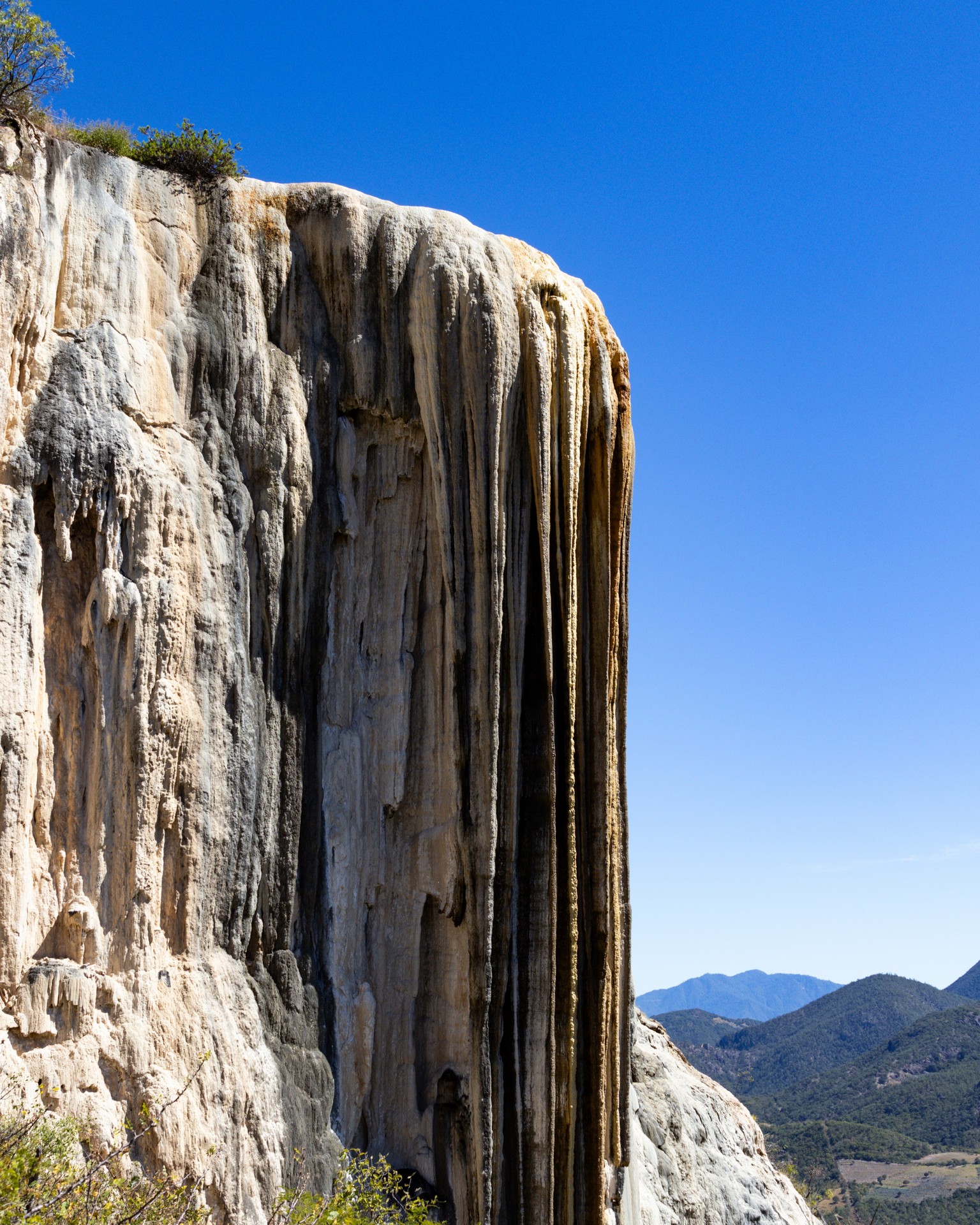
Hierve el Agua: A bit further afield, these petrified waterfalls are a sight to behold. I’d say take a dip in the mineral-rich pools but honestly, one look at the mirky water and you’ll have second thoughts. It’s a great little hiking spot and the pools are very cool. Again, there are plenty of tour options, but hop in a colectivo and grab a guide when you get there.
Arbol del Tule: The town of Tule is a short drive, cycle or run from Oaxaca City and is home to the world’s widest tree. The town itself is really nice too and definitely worth a day out.
San Martín Tilcajete: Is famous for it’s alibrije art and home to the world-famous Jacobo & Maria Angeles studio who have worked with the likes of Adidas, Birkenstock and even Wall Street. It’s a bit further out and for that reason it’s probably worth taking a tour.
Explore Oaxaca’s Art and Museums
Rufino Tamayo Museum of Pre-Hispanic Art: Home to a fascinating collection of artefacts curated by the famous Oaxacan painter Rufino Tamayo.
Museo Textil de Oaxaca: Is one of Oaxaca’s most popular museums, showcasing its weaving traditions.
Museo de Filatelia de Oaxaca (“MUFI”): Is a philatelic museum and it’s free to enter! It’s very photogenic with a mix of inside and outside spaces and, my personal favourite, there’s a vintage VW Beetle that is completely covered in stamps.
Street Art: The neighbourhoods of Jalatlaco and Xochimilco are full of colourful murals that tell a variety of stories. Pack your camera and head out to explore, take a walking tour if you want to get some of the history.
Experience Tradition & Nature
Guelaguetza Festival: If you find yourself in Oaxaca in July, this festival is a must-see. It’s a celebration of indigenous culture with traditional dances, music, and costumes.
Mezcal Tastings and Workshops: Learn about the making of Oaxaca’s famous spirit through tastings and hands-on experiences at mezcal distilleries. There are no shortages to experience, but this one comes highly recommended.
Hiking in the Sierra Norte: Escape the city for some fresh mountain air and trails. Tip: Pueblos Mancomunados offers guided hikes that support local communities.
Temazcal Ceremonies: This traditional sweat lodge experience is deeply rooted in indigenous culture and is a unique way to detox and connect with the region’s spiritual heritage. If you can handle it (editor’s note: I could not).
Destinations for Digital Nomads Beyond Oaxaca City
Puerto Escondido
If it’s your dream to live just moments from the beach as a digital nomad, Puerto Escondido has you covered. Sun, sand, sea and no suspicious parents. But, like all places, Puerto Escondido comes with its pros and cons, here are some quick tips to make the most out of your stay here:
Zicatela Beach if you love surfing or La Punta for a more laidback vibe.
Wi-Fi can be spotty in some areas, Puerto Escondido is still developing as a digital nomad hotspot, always have a back-up option and research your accommodation thoroughly.
Try to avoid the peak season between December and February, other than being bloody hot, it’s over-crowded and prices skyrocket. The best time are in the shoulder months of November and March, outside of peak tourist season (Dec-Feb) and the rainy season (May-Oct), when it’s unbearably humid. Just note that Semana Santa (Holy Week) is in April starting on Palm Sunday each year.
There are frequent reports of unfavourable encounters with local police. Be sensible, be respectful and be street-wise. Even with all these precautions you can just be incredibly unlucky, so always have a digital copy of your passport and/or visa, don’t rent a motorbike without the right paperwork and, well, just try to stay out of trouble. All that said, Puerto Escondido is safe and you should have a relatively trouble-free experience here, just be sensible and respectful.
Getting to Puerto Escondido from Oaxaca:
Colectivo – 3 hours, $15. The transport of choice in México and I’d always recommend a colectivo for drives under an hour, but beyond that, they’re uncomfortable and cramped, plus there’s rarely space for your luggage.
Hire a Private Driver – 3 hours, $300 for up to three people with luggage. If you have the cash to splash, by all means. For inter-city trips, I would recommend Daytrip.com, they function similar to Uber but are really reliable (and normally cheaper) for longer trips.
Rent a Car and Drive Yourself – 3 hours, $50/day + one-way fee. My personal preference for trips like this is to hire a car, but you’ll need to find an agency that will let you do a one-way trip, which will come with an extra fee, unless you’re planning on keeping the car for a while and taking it back (remember to find secure parking).
ADO Bus – 3 hours, $15-20. I can’t recommend ADO enough. I used them to travel all across México and they’re great. Their buses are comfortable, there’s secure luggage storage, they’re (normally) on-time and they cover a huge part of México. Depending on the season, ADO offers up to 12 departures a day and for only $3 dollars more you can take the ADO gl. bus which is their “business class” offering and is worth every penny.
Take a Direct Flight – 45 min, from $100 each way (hand baggage only). Now, I’m really against advising flights in countries where they have great bus services like México does with ADO. Yes the flight is 45 minutes, but remember: get to the airport (up to an hour), check-in, security and waiting (2 hours or more), the flight (1h, providing it’s on time) and then exiting the airport the other side and getting to your accommodation (another hour or more). A 45-minute flight is a full day out. Two or three times longer than a bus and five times the price. Oh and don’t forget the lousy leg-room. Not worth it, at all.
San Jose del Pacifico
You’ll find San Jose high up in the Sierra Madre mountains about a three-hour drive from Oaxaca Centro. It is also, in a convoluted manner, on the way to Puerto Escondido, so you could do both spots as part of a longer trip.
The place offers a peaceful escape from the business of Oaxaca Centro, with a cool climate, enchanting forests and a reputation for spirituality and mushrooms. With that in mind, be prepared for connectivity issues and other minor inconveniences, which makes this location better for a digital detox rather than a long-term digital nomad hotspot.
Tips for making the most out of San Jose del Pacifico:
Have some work lined-up that isn’t solely reliant on a constant internet connection i.e. writing. Back-to-back Zoom calls are a no-no here.
I’ve found that Telcel has more reliable coverage outside of the typical cities in México. From personal experience; avoid Movistar, hugely unreliable outside of CDMX.
Come prepared with cash: This is a small remote village, so don’t expect a modern lifestyle and there are no ATMs here. Bring a sufficient amount of cash for your stay, as many places don’t accept card. This can evolve over time, but don’t get caught with your pants down.
Be prepared for high altitude: San Jose del Pacifico is around 2,400masl, for reference that’s 200m more than CDMX. If you struggle with higher altitudes, head to a pharmacy in Oaxaca and ask for altitude medication, the good stuff is expensive and you’ll normally need to take it daily at least 3 days before you’re due to go up. A useful Spanish sentence is ¿Tienes algo para prevenir el mal de altura? (Do you have something to prevent altitude sickness?).
Use it as a stop-off point: San Jose del Pacifico is great as a weekend retreat on your way to Puerto Escondido (or on your way back to Oaxaca). Staying here long-term as a digital nomad, will come with its drawbacks.
Getting to San Jose del Pacifico from Oaxaca:
Colectivo – 4 hours, $15. The transport of choice in México and I’d always recommend a colectivo for drives under an hour, but beyond that, they’re uncomfortable and cramped, plus there’s rarely space for your luggage. Also, it’s a windy trip up, so not recommended if you struggle with altitude sickness.
Hire a Private Driver – 3 hours, $300 for up to three people with luggage. If you have the cash to splash, by all means. When you’re on the ground in Oaxaca, shop around for options and make sure to get recommendations from locals.
Rent a Car and Drive Yourself – 3 hours, $50/day + expenses. My personal preference for trips like this is to hire a car. Just make sure that your accommodation is accessible and you have secure parking, first.
Mazunte and Zipolite
Mazunte and Zipolite are two coastal neighbours that are all about relaxation and sustainability. Similar to San Jose del Pacifico, these two locations will be better suited as working holidays, rather than somewhere to knuckle down on Zoom calls all day.
Mazunte is famous as an eco-tourism hub with plentiful yoga retreats, the must-see Mexican Turtle Centre, and a commitment to conservation. Zipolite, on the other hand, is a spiritual retreat, famed for its clothing-optional beach and bohemian vibes.
Both towns are ideal if you’re looking for a slower pace of life and maybe have a lower workload than normal. With beachfront cafés and eco-lodges perfect for unwinding and you can go dolphin-spotting or hike Punta Cometa at sunset, you’ll come back feeling refreshed and probably to 700 emails because you forgot to put your ‘out-of-office’ on, oops.
Mazunte and Zipolite are along the same stretch of coast as Puerto Escondido, you can get to Mazunte from Puerto Escondido in as little as an hour by car, and Zipolite is another 15-20 minutes more.
Is there a Digital Nomad visa for México?
Whilst Oaxaca is home to two “international” airports: Oaxaca Airport (OAX) Xoxocotlán Airport and Puerto Escondido Airport (PXM), they only fly regionally to other parts of México and a handful of airports in the US. With that in mind, I fly into MEX and clear customs there, which is home to some wonderful e-gates (a rare occurrence in LATAM) and you’ll be through in minutes with a lovely 6-month stay under your belt. From there, you can head to Oaxaca via ADO (about 8 hours) or take a connecting flight which is about an hour. If you’re already in the airport, take the extra flight, it’s nice and easy.
If you’re looking for a longer-term stay, then México is home to a great visa for digital nomads called the Temporary Residence Visa. As a digital nomad, you can apply for the visa under the “economic solvency” rule, providing you can prove monthly income “free of taxes greater than the equivalent of three hundred days of the general minimum wage in force in Mexico City” At the time of writing (January ’25) this is just shy of £3,500 per month. There are a few other requirements, but if you’re successful, you’ll be granted a one-year stay and you’ll be able to enter into proper rental agreements (buh-bye Airbnb!) and after your first year you can extend, up to a total of four years, which can then provide a direct route to PR in México.
How To Be A Responsible Digital Nomad in Oaxaca
The charm of Oaxaca lies in its rich culture, the surrounding landscapes and the myriad of vibrant communities. But with increased tourism and digital nomadism, this means that a place can lose its charm. So, avoid Starbucks and Burger King and make sure that you:
Eat like a local: Buy from street-food vendors, go to a cooking class, ask locals what are the best locally-owned restaurants or eat from a family-run eaterie.
Shop locally made goods: There are no shortages of local markets; Benito Juarez and 20 de Noviembre are two firm favourites, plus they’re right next door to each other!
Choose local services: Yes GetYourGuide and Airbnb Experiences are super convenient, but ask for advice when you’re on the ground, you’ll probably save a few quid whilst you’re at it.
Use water responsibly: Oaxaca is prone to droughts. Take shorter showers, reuse your towels, don’t leave taps running and use the laundromat sparingly.
Ask before you pap: Not everybody likes being filmed for your TikTok… remember, this is life for most people, don’t treat people like they’re in a zoo. Be mindful.
FAQs for Digital Nomads in Oaxaca
Would you add anything or still have questions? Drop me a line.
Conclusion
I can’t recommend Oaxaca highly enough and if you’re a digital nomad in México, you’ll definitely want to consider Oaxaca. If you find the life of CDMX a bit too hectic and want something a bit more peaceful but still maintaining the benefits of being in a city, Oaxaca is your perfect stop as a digital nomad. When you throw in an international airport (only serves US and Mexico), a very famous digital nomad beach resort just a couple of hours away (that has an airport too) and the cultural escapes of Tule, San Jose and Mazunte – you truly have everything you will ever need.